Canvas UGC and the FTC: How to Disclose and Stay Clean
Brand-owned creator accounts can mislead if they aren't disclosed, and brands can be liable. What the FTC rules mean for canvas UGC, plus a checklist.
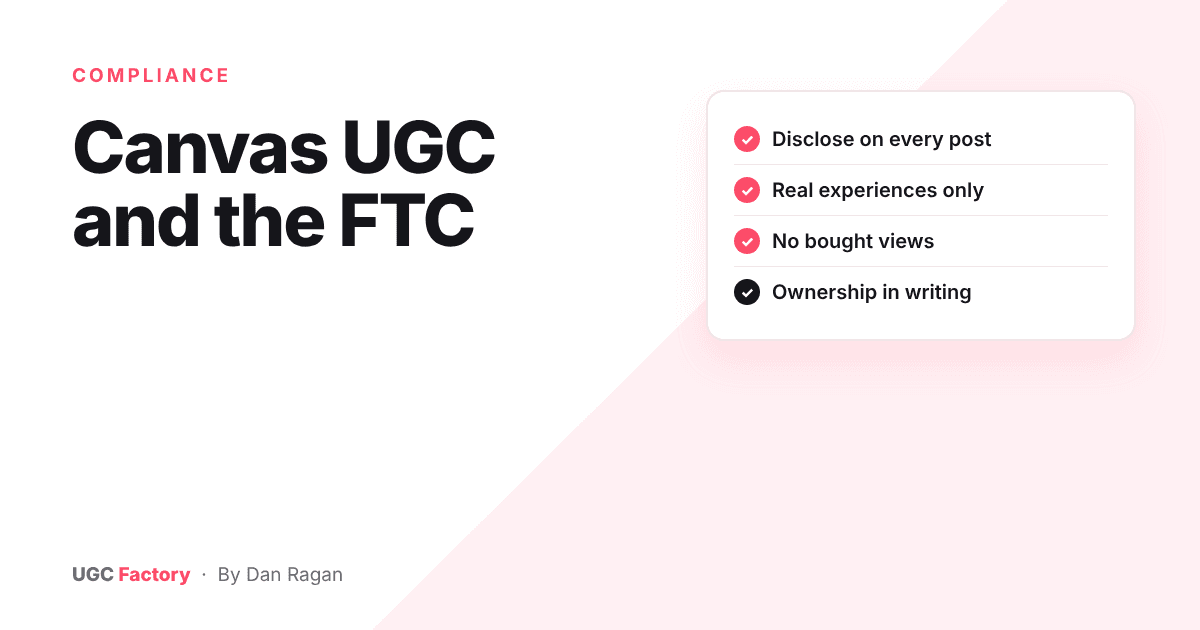
Table of Contents
Canvas UGC works because it looks native. That's also its biggest risk. In July 2026, BBB National Programs' Center for Industry Self-Regulation warned that canvas content presented as independent opinion can mislead consumers, and that brands can face liability when creators don't disclose. If you run canvas, build disclosure into production from day one. This is general information, not legal advice.
The rules that apply
The FTC Endorsement Guides. Updated in 2023. Anyone paid to promote a product must disclose the material connection clearly and conspicuously, however organic the post looks.
The FTC's rule on consumer reviews and testimonials. Effective October 21, 2024. It bans fake reviews and testimonials, including ones that misrepresent who wrote them or their experience, and bans buying fake social media indicators like bot-generated views or followers for commercial purposes.
Platform rules. TikTok and Instagram both offer paid-partnership disclosure tools and prohibit misleading identity and inauthentic behavior.
The checklist
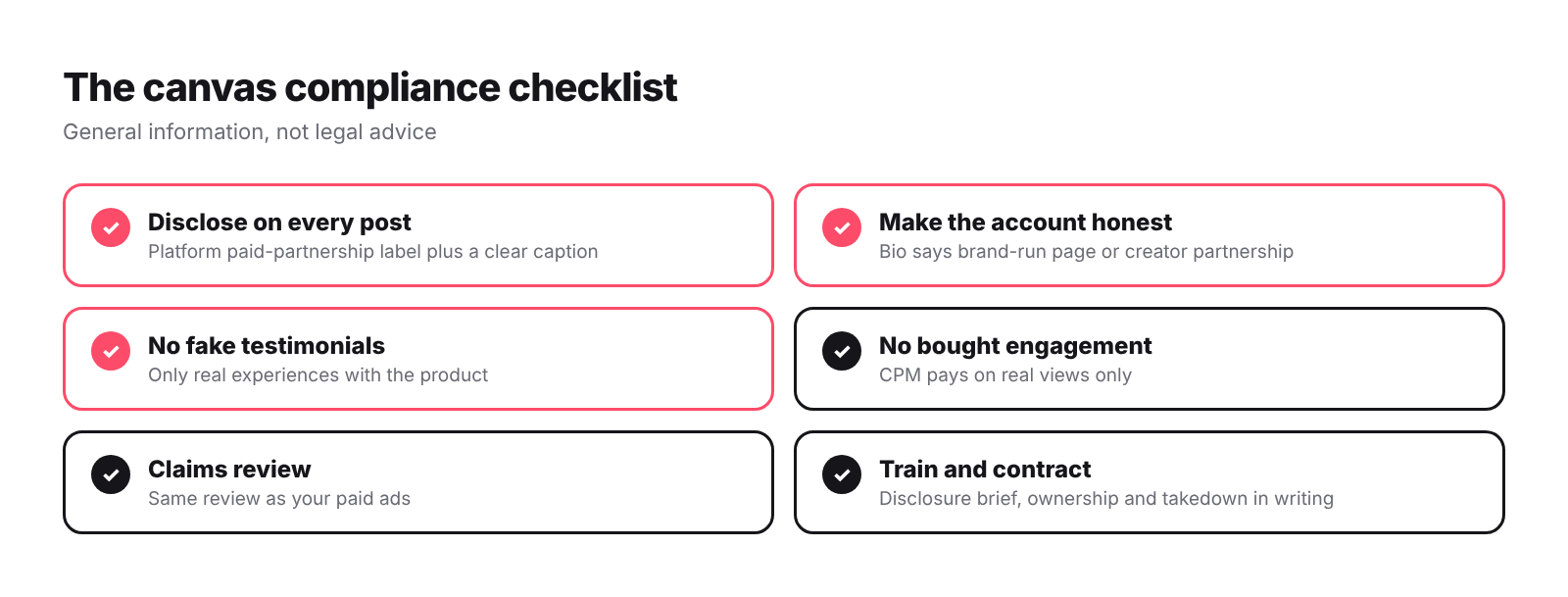
Disclose on every post. Use the platform's branded-content or paid-partnership label, plus a clear on-screen or caption disclosure.
Make the account's relationship obvious. The bio says it's a brand-run page or a creator partnership.
No fake testimonials. Creators only describe experiences they've actually had with the product.
No bought engagement. Never buy views, followers or comments. CPM pay must be on real views.
Claims review. Health, money and performance claims get the same review as your paid ads.
Train creators. A short disclosure brief before the first post, and spot checks after.
Put it in the contract. Disclosure duties, account ownership and takedown rights in writing.
It's already happening
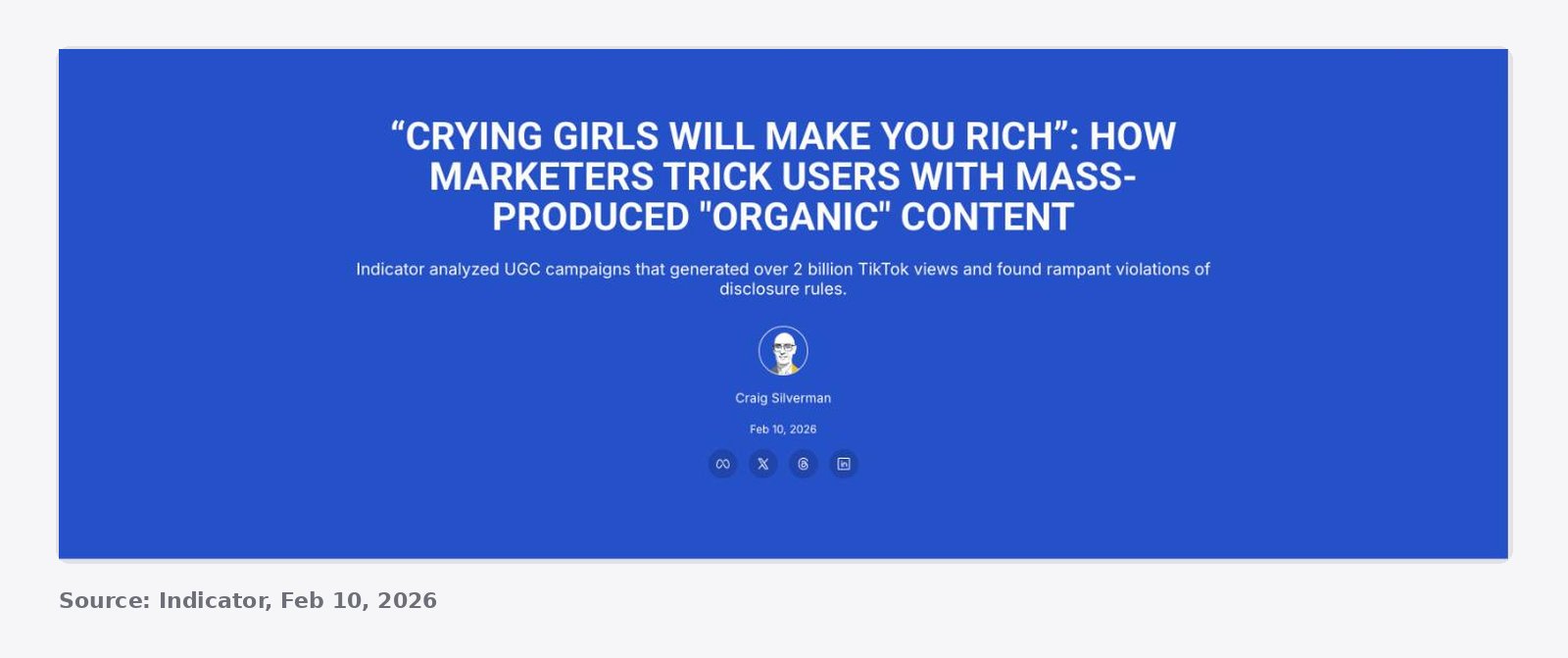
In February 2026, Indicator traced six-plus mass-produced "organic" UGC campaigns with 2B+ TikTok views. It found the dating-safety app Tea running at least a dozen accounts that existed only to promote it, none using TikTok's paid-promotion label, and shared 60+ accounts with TikTok and the FTC. Content came down after contact. In July 2025, Dr. Squatch pulled some paid TikTok creator posts after the National Advertising Division challenged undisclosed incentives (Digiday).
Why it's worth the trouble
Disclosed content still performs. People watch what's useful or entertaining, and the interest graph cares about the video, not the label. The brands that cut corners are building on a channel that regulators and platforms are already watching. The brands that run it clean get to keep it.
Read next: launching a canvas program in 30 days.
FAQ
Do canvas UGC posts need a disclosure?
Yes. Under the FTC Endorsement Guides, paid creators must clearly disclose their connection to the brand, even on brand-owned accounts that look organic.
Can brands be liable if creators don't disclose?
Yes. BBB National Programs' Center for Industry Self-Regulation noted in 2026 that brands can face liability for a creator's failure to disclose.
Can canvas creators give testimonials?
Only about real experiences with the product. The FTC rule effective October 21, 2024 bans fake or misrepresented reviews and testimonials.
About Dan Ragan
Dan Ragan has spent his career going where it's hard to scale. He ran live-streaming activations for brands like Bose, Marriott and Warner Bros, then founded UGC Factory, which has made creator ads for about 1,000 DTC brands and now runs on an AI back end with two full-time employees. His newest work takes the creator commission model off the screen: paid ambassadors running in-person demos, filmed on Meta glasses and paid on the sales they start. He's proving it on BASSCRAFT, the haptic bass seat cushion he co-founded, and building it into POV Factory for other brands. He lives in Austin and also owns Soundhouse ATX.