What Is Canvas UGC? The 2026 Guide for Brands
Canvas UGC pays creators to post every day on fresh, brand-owned accounts, on a base plus CPM plus commission. Here's how it works, what it costs, and where it fits next to paid ads.
Table of Contents
Canvas UGC is a creator model where a brand pays creators to post short-form videos every day on new accounts the brand owns, instead of on the creator's own profile. Creators are usually paid a small base, a CPM (a rate per 1,000 views), and sometimes a commission on sales. You'll also hear it called mass UGC, tech UGC or high-volume UGC.
It started with apps and AI tools that needed cheap reach at scale. In 2026 it's spreading to DTC brands, and it's one of the most common questions we get from founders. This guide covers how it works, what it costs, and how to keep it clean.
Who's actually doing it
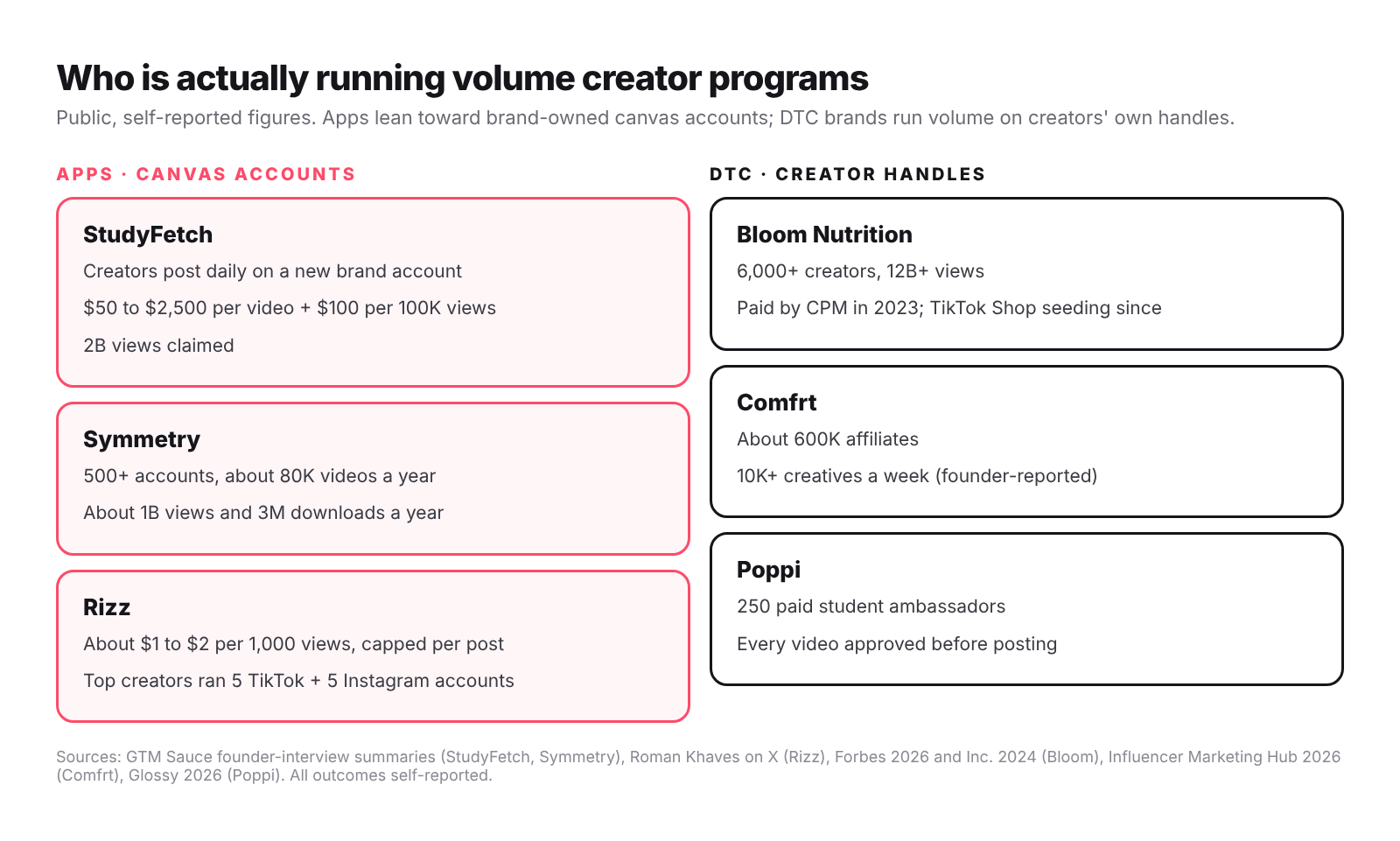
Brand-owned canvas accounts are documented mostly for apps. StudyFetch has creators post daily on a new StudyFetch account, paying $50 to $2,500 per video plus $100 per 100,000 views, and claims 2B views (GTM Sauce). Symmetry runs 500+ accounts and about 80,000 videos a year. Rizz's founder posted on X that top creators ran five TikTok and five Instagram accounts each at about $1 to $2 per 1,000 views. DTC brands run the same volume logic on creators' own handles: Bloom Nutrition counts 6,000+ creators (Forbes), Comfrt reports about 600,000 affiliates (Influencer Marketing Hub), and Poppi pays 250 student ambassadors (Glossy). These figures are self-reported.
How canvas UGC works
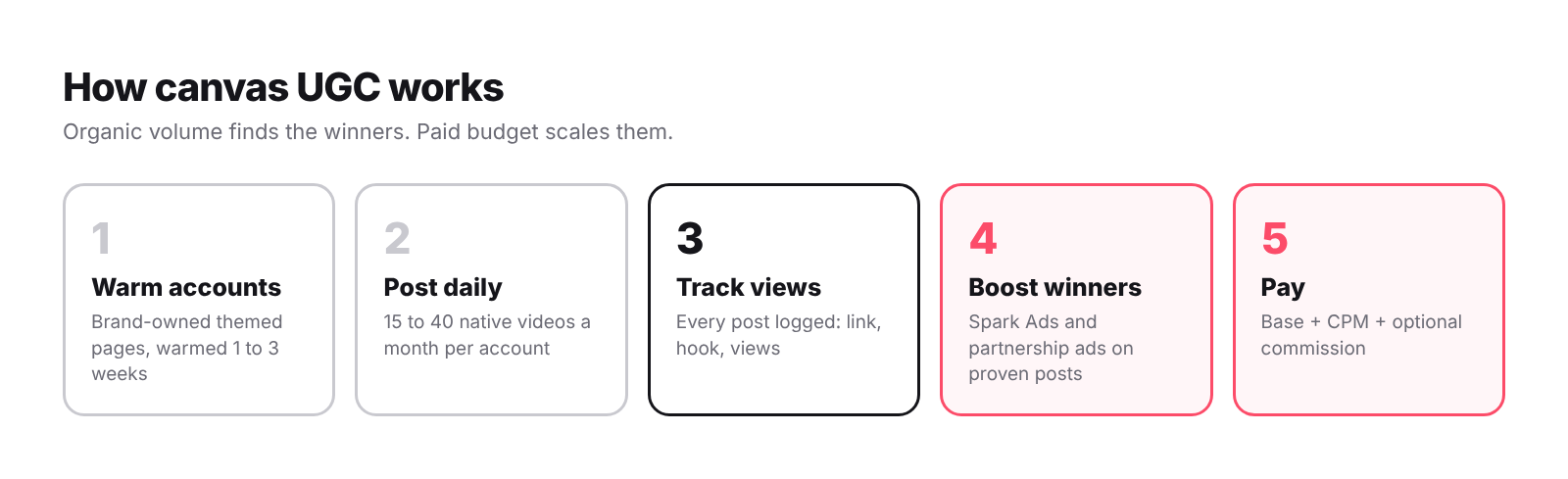
The brand opens and warms up accounts. Usually several niche pages on TikTok, Instagram Reels and YouTube Shorts, often with generic names tied to a topic rather than the brand. Programs typically warm accounts for one to three weeks before creators start (ReelPilot).
Creators post on a cadence. Fifteen to forty videos a month per account is a common range (Plug Pro). The look is native and lo-fi, not ad-polished.
Views are tracked per video. Each post is logged with its link and view count so CPM pay can be calculated.
Winners get boosted. Posts that pull organic views become Spark Ads on TikTok or partnership ads on Meta, so paid budget only goes behind content the algorithm already likes.
Creators get paid on output and reach. A base for showing up, CPM for views, and commission if the brand can attribute sales.
How it differs from traditional UGC
Traditional UGC buys a finished video for a flat fee, usually $100 to $500 or more, and the brand runs it as an ad.
Canvas UGC buys a posting habit. The creator's follower count doesn't matter because the account starts at zero. Pay rises and falls with views.
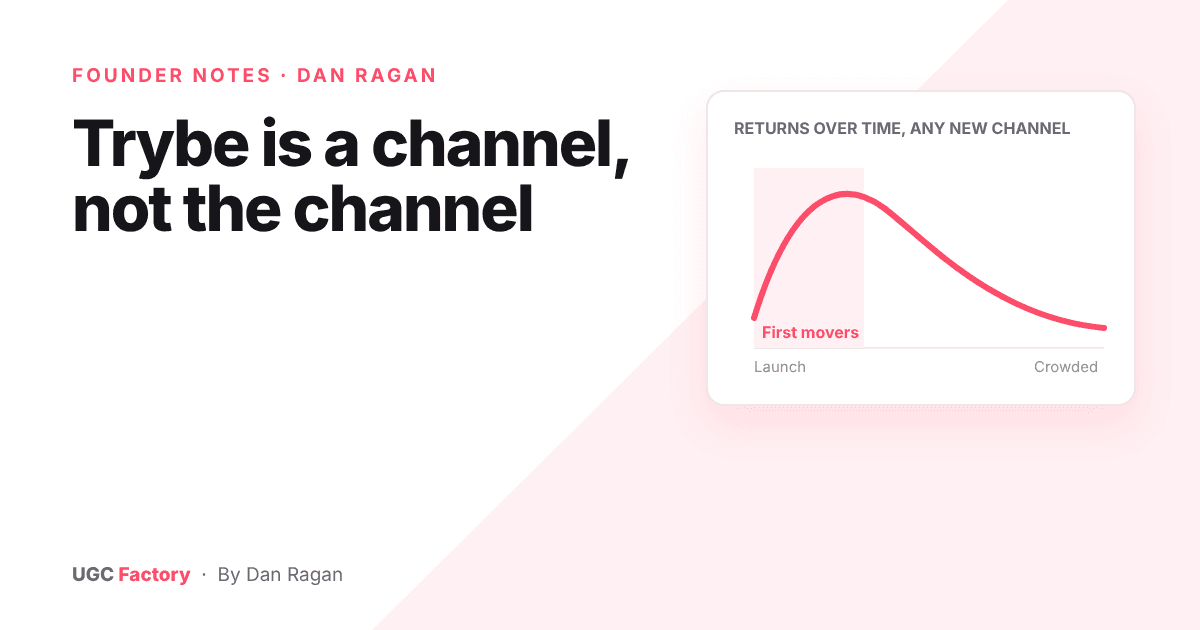
Commission platforms like Trybe pay creators on the sales or ad spend their videos drive through the brand's ad account. Canvas is organic-first; Trybe-style programs are paid-first. Many brands will run both. See canvas UGC vs. Trybe vs. traditional UGC.
What canvas UGC costs
Published ranges in late 2026:
CPM: roughly $2 to $6 per 1,000 views (ReelPilot, Plug Pro). Clipping marketplaces list lower: Content Rewards reported a median listed rate of $1.00 per 1,000 views across 710 live campaigns on November 16, 2026, and $2.00 for UGC-only campaigns.
Base: often $10 to $20 per video, or a flat monthly retainer for a set quota (ReelPilot).
Commission: optional, and only works when sales can be traced to the account or a code.
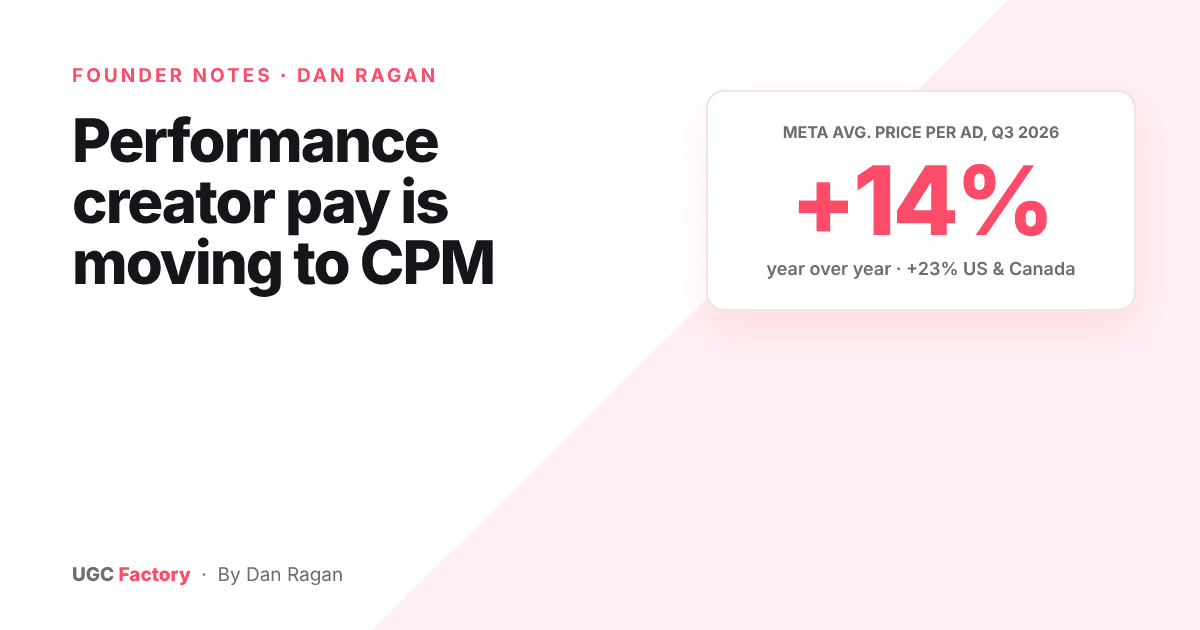
Compare that with paid reach. Meta's median CPM for brands tracked by Triple Whale was $15.06 for August 2025 to July 2026, up 13% year over year. A canvas view and a paid impression aren't the same thing, but the gap is why brands are moving budget here. More on that in arbitraging impressions.
Who it's for
Good fit: products that explain well in 15 seconds, apps and software, consumables with a visual hook, and brands that already have a paid engine to scale winners.
Weak fit: products that need trust built over weeks, heavily regulated claims, or brands with no one to review and boost what works.
The risks to manage
Canvas content looks like a regular person's post, which is the point and the risk. BBB National Programs' Center for Industry Self-Regulation flagged in July 2026 that undisclosed brand-owned accounts can mislead consumers, and that brands can be liable when creators don't disclose. Disclose the relationship, never fake reviews or testimonials, and follow each platform's rules on account identity. Our canvas UGC disclosure guide covers the checklist.
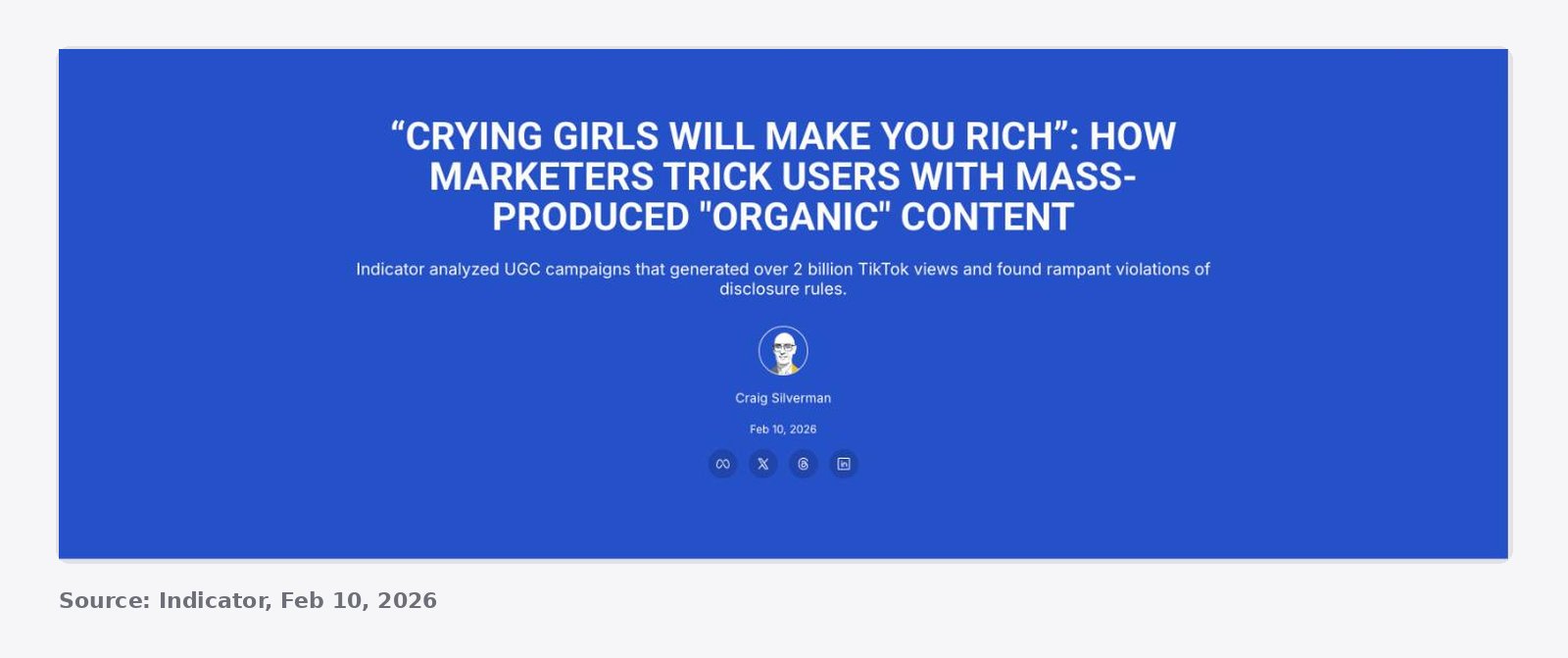
This isn't hypothetical. In February 2026, Indicator traced six-plus undisclosed mass-UGC campaigns with more than 2B TikTok views, named the dating-safety app Tea, and shared 60+ accounts with TikTok and the FTC.
Our take
Paid reach keeps getting more expensive, and the algorithm now rewards specific content for specific interests more than it rewards who posted it. Canvas UGC is how you buy that reach at volume. It isn't a replacement for paid. It's the testing ground that tells paid what to scale. We run canvas programs at UGC Factory, and the brands that win treat it like a lab: lots of posts, fast reads, and only the proven winners get budget.
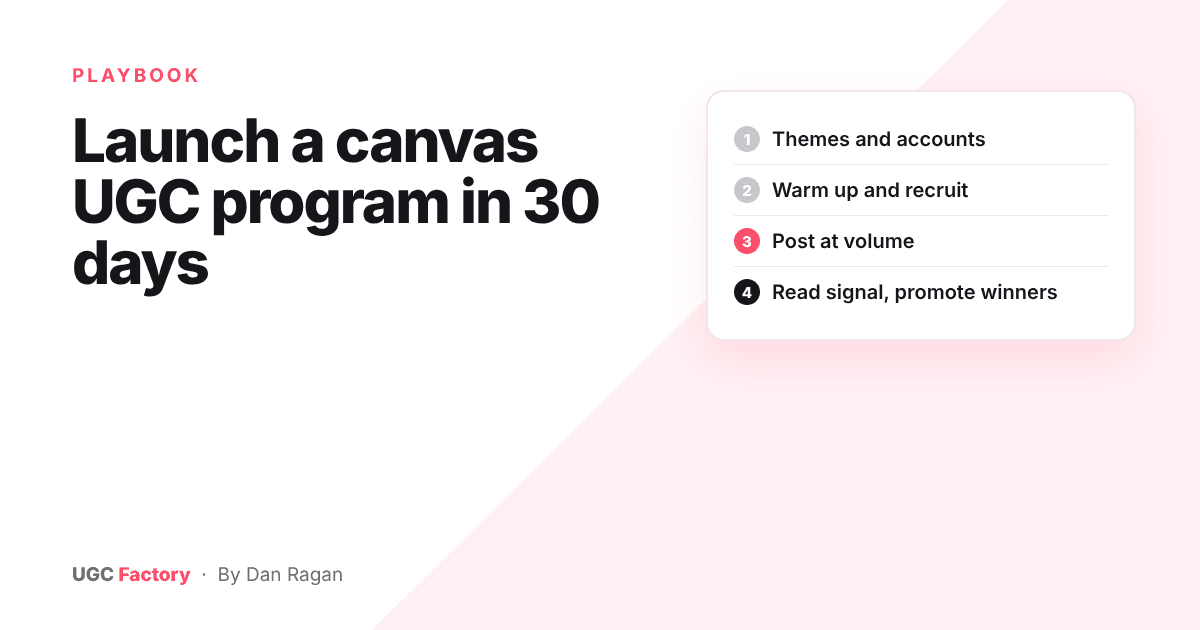
Read next: how to pay canvas UGC creators and how to launch a canvas program in 30 days.
FAQ
What is canvas UGC?
Creators posting short-form videos daily on new, brand-owned accounts, paid a base plus CPM plus optional commission, instead of posting on their own profiles.
Is canvas UGC the same as mass UGC or tech UGC?
Yes. The terms are used interchangeably. "Tech UGC" comes from app and AI companies that popularized the model.
How much does canvas UGC cost?
Published ranges in late 2026 are about $2 to $6 per 1,000 views, often with a $10 to $20 per-video base. Clipping marketplaces list closer to $1 per 1,000 views.
Do canvas creators need followers?
No. Accounts start at zero, and pay is tied to output and views, not the creator's audience.
Is canvas UGC legal?
Yes, when the paid relationship is disclosed and the content follows FTC guidance and platform rules. Undisclosed sponsored posts create risk for both the creator and the brand. This isn't legal advice.
About Dan Ragan
Dan Ragan has spent his career going where it's hard to scale. He ran live-streaming activations for brands like Bose, Marriott and Warner Bros, then founded UGC Factory, which has made creator ads for about 1,000 DTC brands and now runs on an AI back end with two full-time employees. His newest work takes the creator commission model off the screen: paid ambassadors running in-person demos, filmed on Meta glasses and paid on the sales they start. He's proving it on BASSCRAFT, the haptic bass seat cushion he co-founded, and building it into POV Factory for other brands. He lives in Austin and also owns Soundhouse ATX.