Canvas UGC vs. Trybe vs. Traditional UGC: Which One When
Canvas buys reach, Trybe buys sales, traditional UGC buys finished ads. A side-by-side of the three creator models and how the best brands stack them.
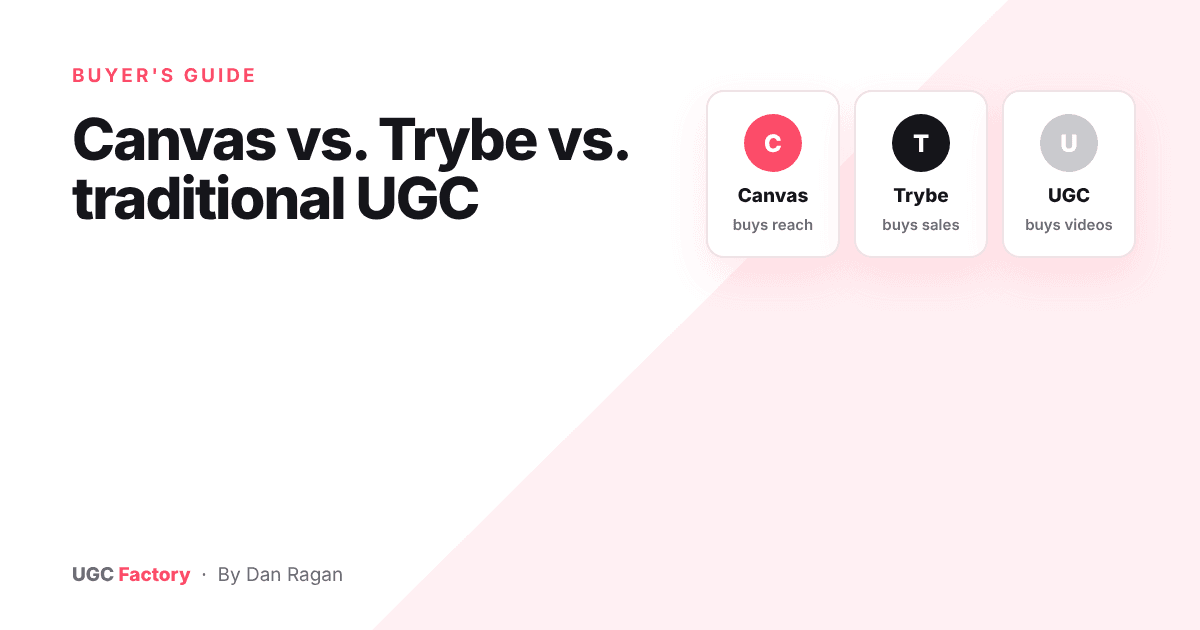
Table of Contents
Brands now have three distinct ways to pay creators, and they answer different questions. Traditional UGC buys a finished video. Trybe-style commission programs buy sales from videos you run as ads. Canvas UGC buys reach from creators posting daily on organic accounts. The mistake is picking one. The win is knowing which job each does.
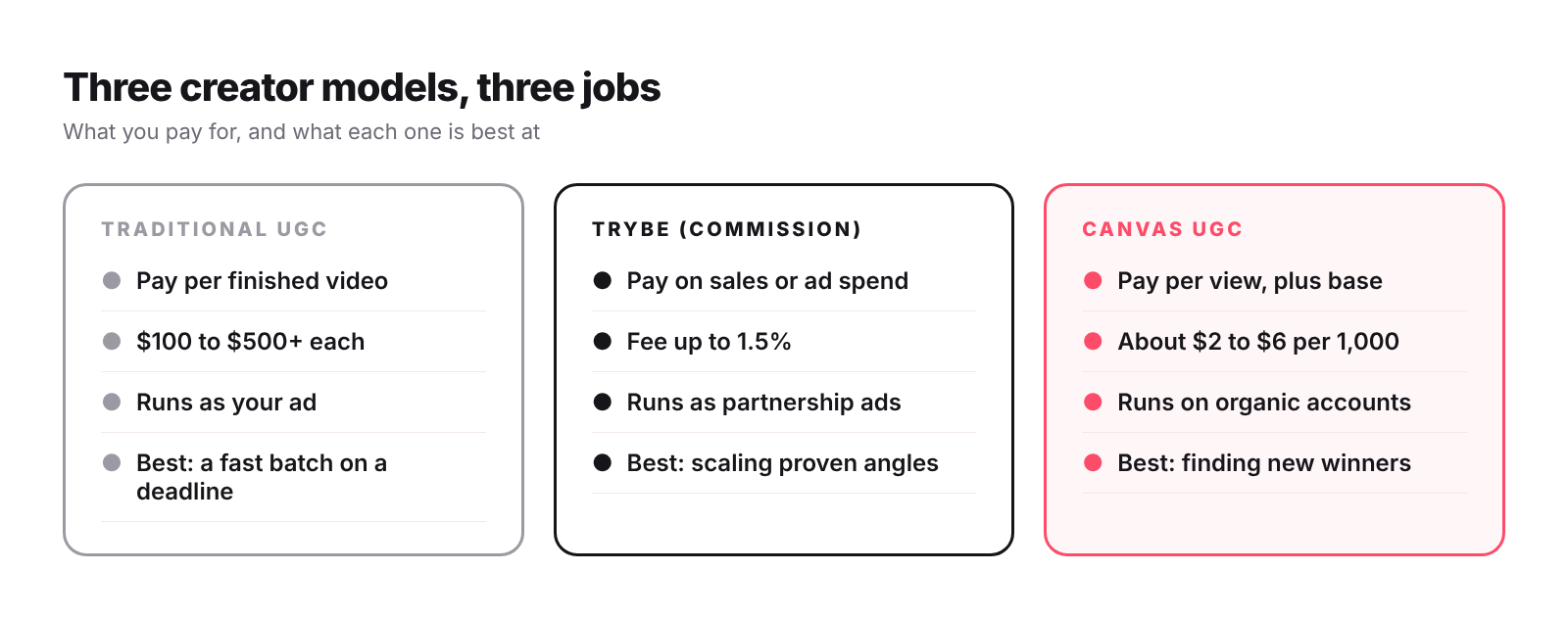
Side by side
| Traditional UGC | Trybe (commission) | Canvas UGC | |
|---|---|---|---|
| You pay for | A finished video | Sales or ad spend driven | Posting volume and views |
| Typical pay | $100 to $500+ per video (ReelPilot) | Creator commission, plus Trybe's fee of up to 1.5% (Socialync) | About $2 to $6 per 1,000 views, often with a base (ReelPilot) |
| Where it runs | Brand ad account | Brand ad account as partnership ads | Organic accounts, then paid |
| Needs ad budget? | Yes | Yes, commission only flows with spend | No to start |
| Best for | A fast batch of polished ads | Scaling proven angles on Meta | Finding new winners cheaply |
| Weak spot | No upside alignment | Creators stall without management | Views aren't sales; disclosure risk |
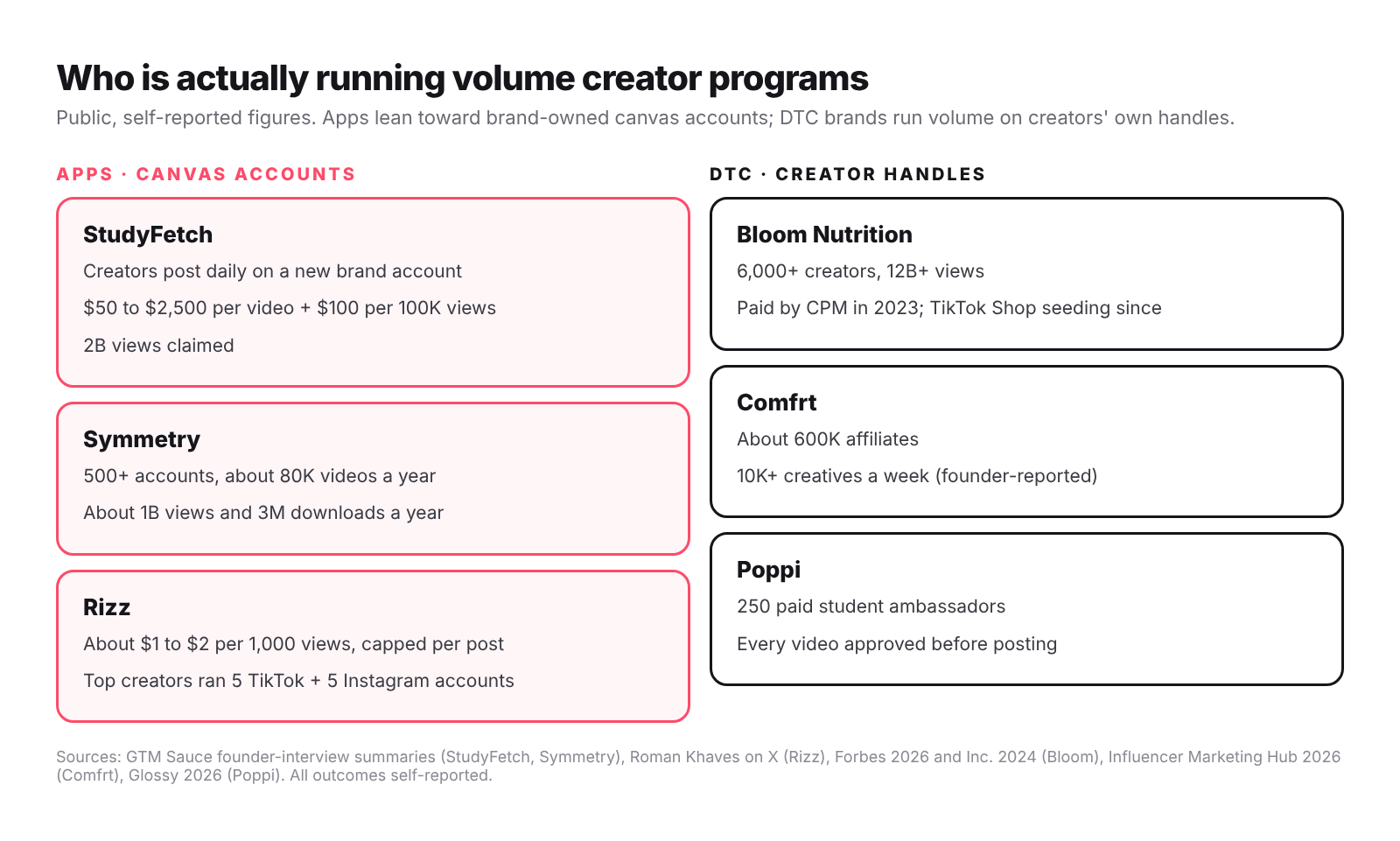
How the best brands stack them
Canvas finds the angle. Daily posts on themed accounts surface hooks the algorithm likes.
Trybe scales it. Creators remake the winning angle as ads and earn commission when it sells.
Traditional UGC fills gaps. When you need a specific shot, a launch asset or a deadline, buy it outright.
Where Trybe fits
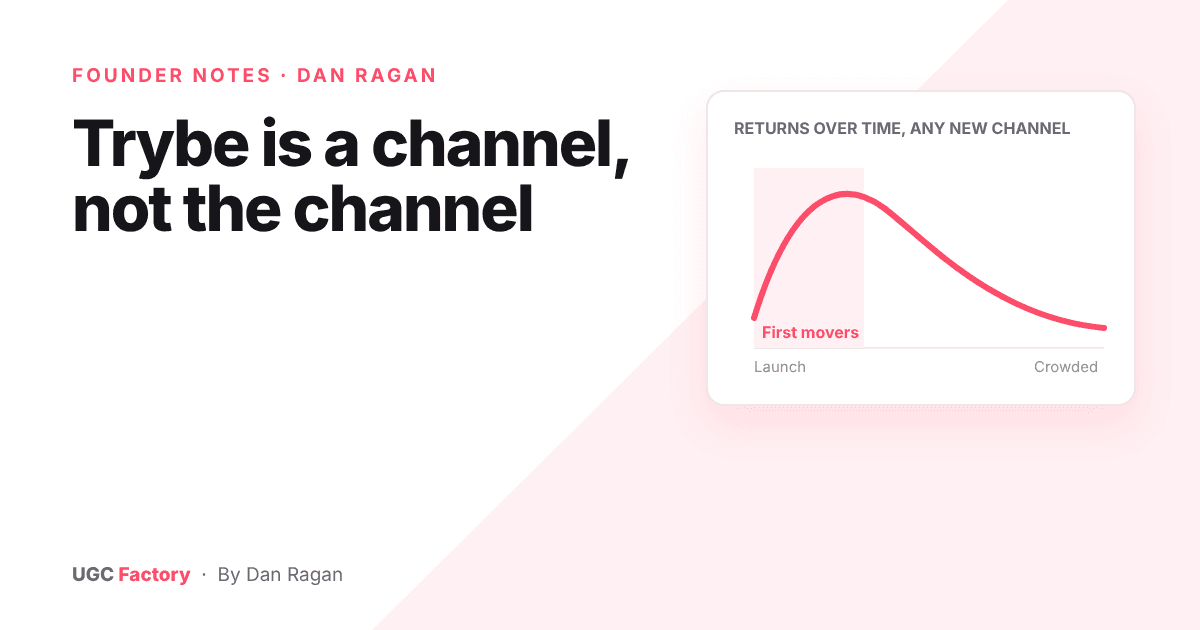
Trybe is the best tool we've used for commission creator ads, and we use it ourselves. It's a channel, not the whole strategy. See our Trybe review and why Trybe is a channel, not the channel.
Quick decision guide
No ad budget yet: start with canvas to find signal.
Spending on Meta every week, with proven angles: add Trybe and manage creators like a sales team.
Need assets by a date: traditional UGC.
All of the above: stack them, with one team reading the data across all three.
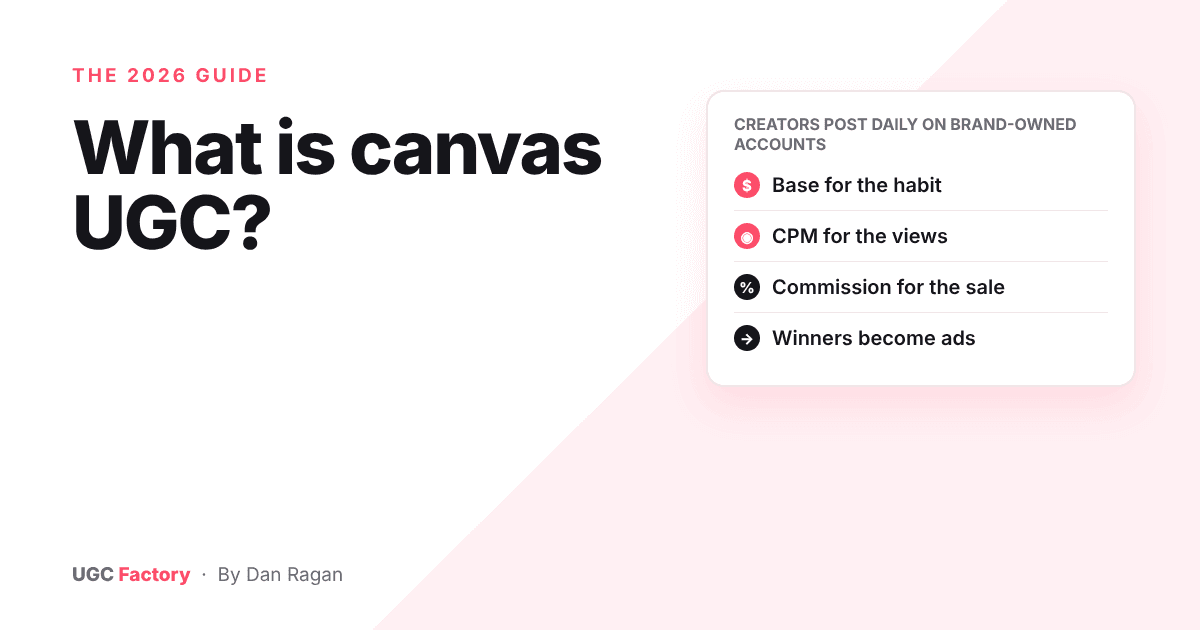
Read next: what canvas UGC is and Trybe vs. a UGC agency.
FAQ
What's the difference between canvas UGC and Trybe?
Canvas pays creators for views on organic accounts. Trybe pays creators on sales or ad spend when their videos run as ads in the brand's ad account.
Is canvas UGC an alternative to Trybe?
It's a complement. Canvas finds winning angles cheaply; Trybe-style commission programs scale them on paid.
Is traditional UGC still worth buying?
Yes, for specific assets on a deadline. It's the least aligned with performance, so most brands use it to fill gaps.
About Dan Ragan
Dan Ragan has spent his career going where it's hard to scale. He ran live-streaming activations for brands like Bose, Marriott and Warner Bros, then founded UGC Factory, which has made creator ads for about 1,000 DTC brands and now runs on an AI back end with two full-time employees. His newest work takes the creator commission model off the screen: paid ambassadors running in-person demos, filmed on Meta glasses and paid on the sales they start. He's proving it on BASSCRAFT, the haptic bass seat cushion he co-founded, and building it into POV Factory for other brands. He lives in Austin and also owns Soundhouse ATX.