Trybe Review (2026): What It Does Well and What's Still on You
A hands-on Trybe review from an agency running a live program: how it works, what it does well, pricing, terms to read, and what brands still own.
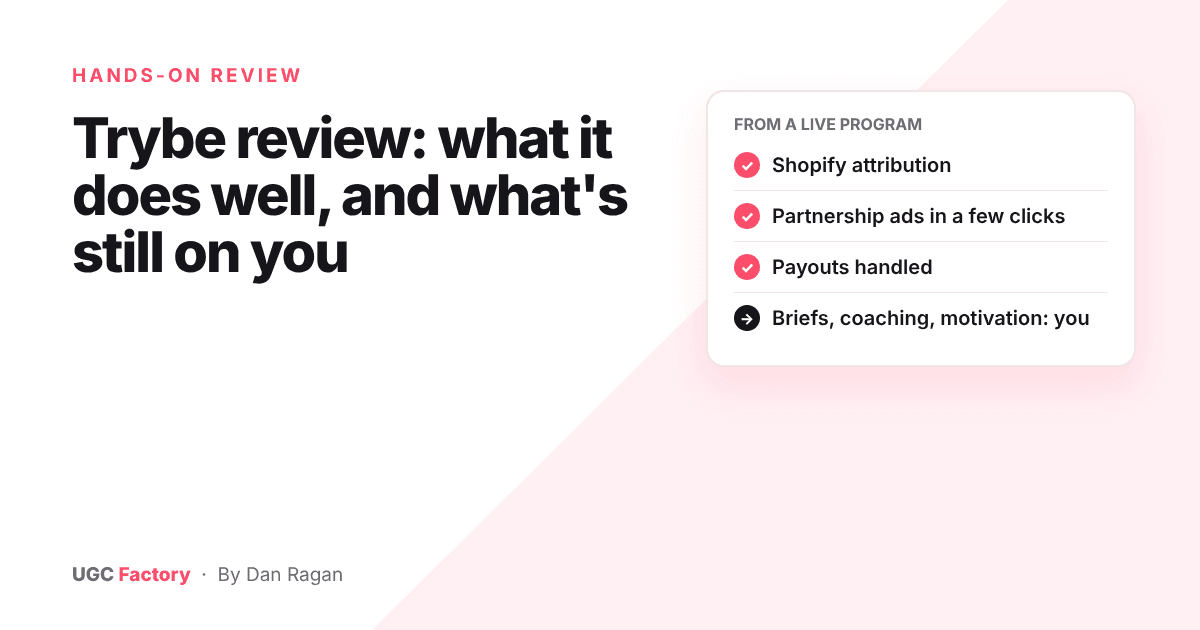
Table of Contents
Most Trybe reviews online are written by software companies selling a competing tool. This one comes from an agency that uses it. We set up a live Trybe program for BASSCRAFT™, a hardware brand our founder co-founded, in October 2026: connected Shopify and Meta, created a commission program, and walked every screen on the brand and creator sides.
Name check: this review covers Trybe at jointrybe.com, the performance UGC platform for brands and creators. It is not TRIBE Group (tribegroup.co) or the other apps named Trybe. Trybe isn't paying us for this review.
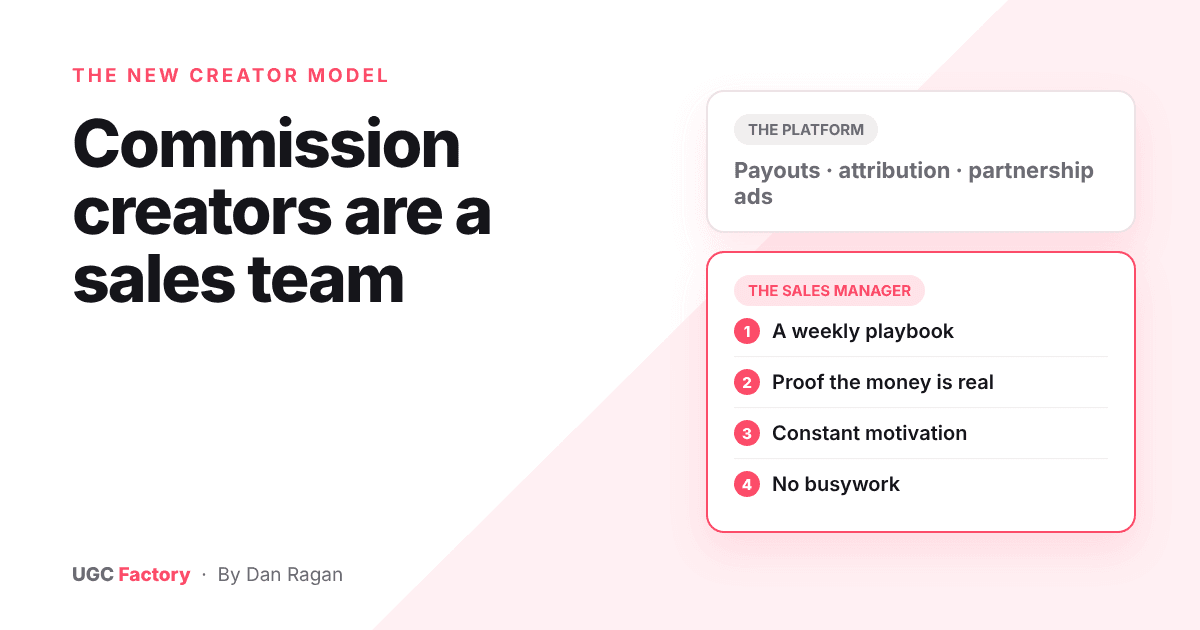
The short answer: Trybe is the best tool we've used for running UGC creators on commission through Meta ads. Setup is fast, attribution is solid for Shopify brands, and the creator experience is polished. What it doesn't do on its own is manage your creators: strategy, feedback, editing and motivation are still on you or a partner, and that's where programs win or lose.
How Trybe works for brands
Connect your store. Shopify brands install Trybe's app, which adds a pixel and imports the catalog. Non-Shopify stores use the Trybe pixel. Headless setups use both.
Connect Meta. Choose the ad account and the Facebook or Instagram page your partnership ads run under. TikTok connections are offered too.
Create a program. Pick how creators get paid, the payout schedule, the rules and the products.
Invite creators. Share an invite link or search the Discovery marketplace.
Review and launch. Approve, reject or request a revision with timestamped comments, then build ads straight into your Meta campaigns.
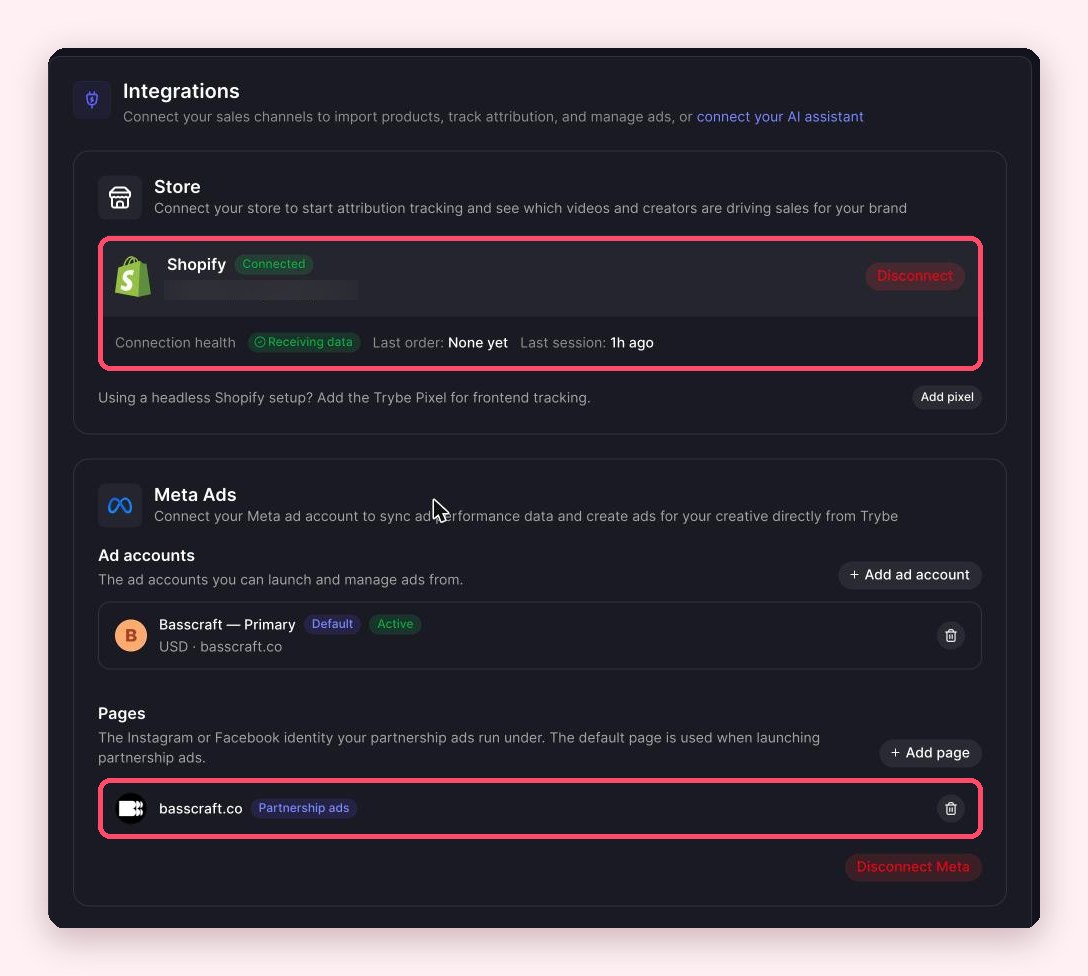
It's genuinely quick. The brand side took us one evening to connect. Most of the time went into decisions about the program, not the software.
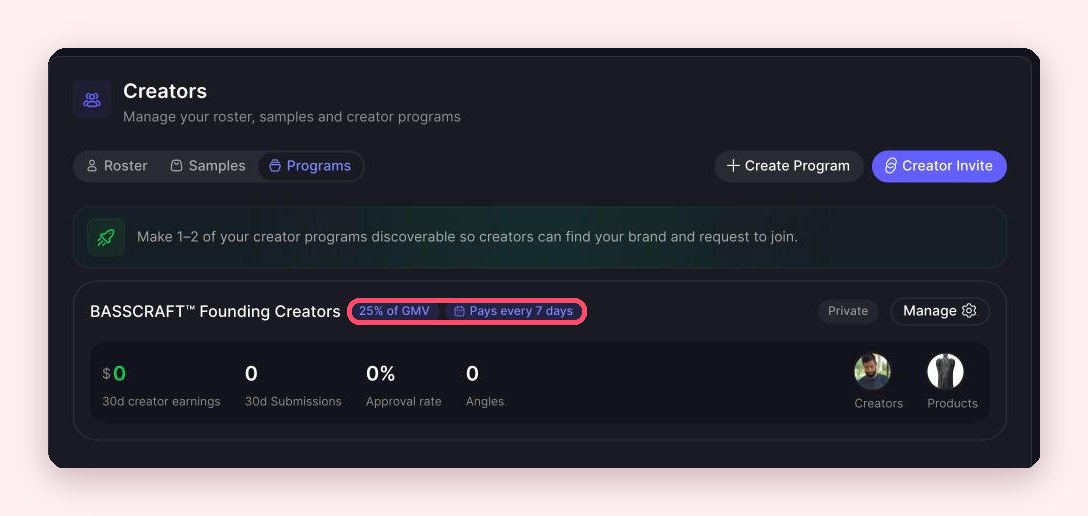
How it works for creators
Creators join a brand through an invite link with an Instagram login, request a product sample, turn on partnership ads, film, and submit either a single video or a "concept" with several variations. The creator app shows submissions, earnings, watch time, hook rate and CTR, and pays out through Stripe.
What Trybe does well
Attribution for Shopify brands. Orders tie back to the creator and the submission that drove them, with a toggle to Meta's own attribution.
Partnership ads in a few clicks. Approved videos go into existing Meta campaigns under the creator's identity without the usual permissions back-and-forth.
Payouts handled. Trybe charges the brand and pays creators through Stripe, so you don't run invoices or international payments.
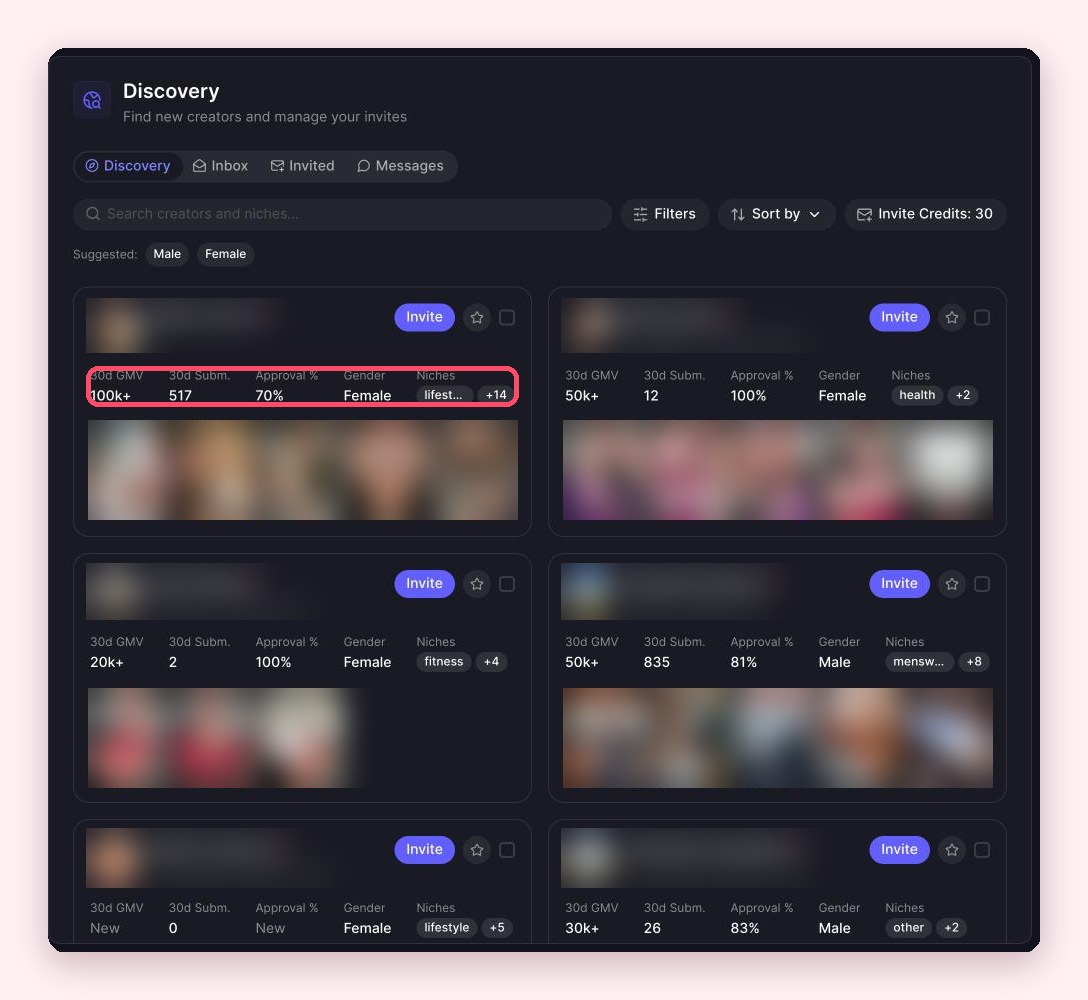
Creator discovery with performance data. Discovery shows each creator's 30-day GMV band, submissions and approval rate, not just follower counts.
A creator app creators like. The Trybe Creators app held 4.92 stars from more than 5,000 App Store ratings in late October 2026 (Socialync).
An AI connector. Trybe offers an MCP server, so tools like Claude can read submissions, performance and creator chats. We use it for our own reporting.
What's still on you
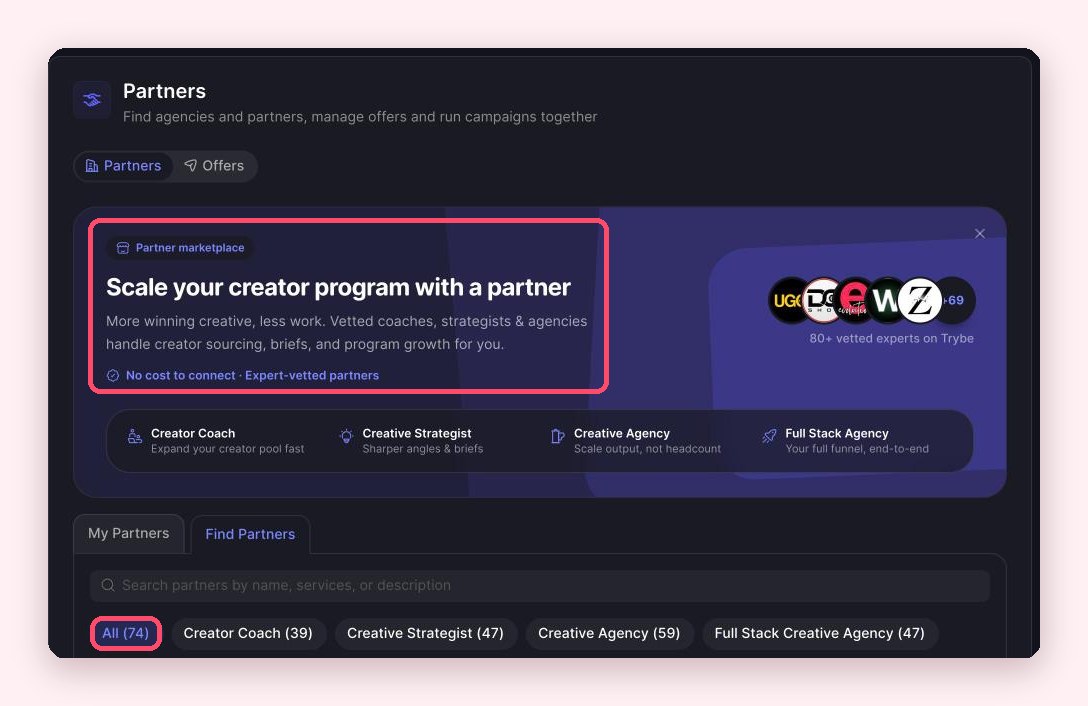
None of these are flaws in the software. They're jobs a platform was never meant to do, and Trybe says as much by listing partner agencies inside the app.
Telling creators what to make. A program description isn't a brief. Creators need the angles and hooks winning in your account right now.
Coaching after a miss. Review tools exist, but someone has to write the note that makes the next ad better.
Editing and versioning. Turning one strong shoot into a dozen hook and format variations happens outside the platform.
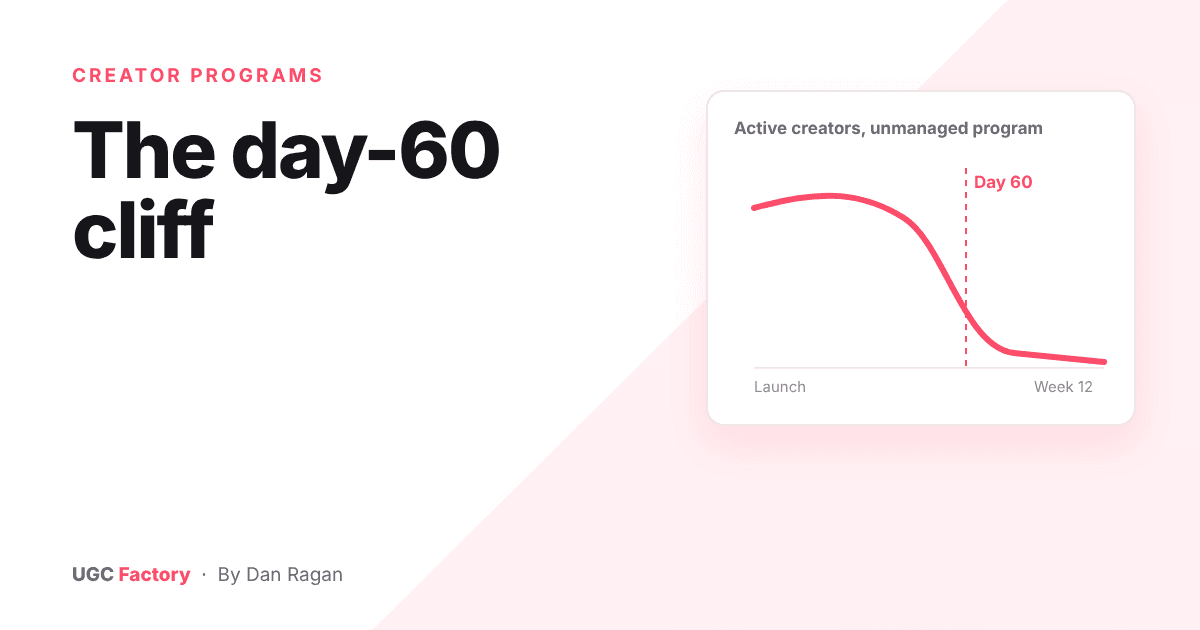
Keeping creators motivated. Leaderboards help. A person sharing wins and pulling quiet creators back in matters more.
Deciding what to spend. Commission only flows if the brand puts budget behind the ads.
Pricing and terms worth reading
| What creators are paid on | Trybe's fee to the brand |
|---|---|
| Attributed sales | 1.5% of attributed sales |
| Ad spend | 1.25% of ad spend |
| Flat fees, retainers, bonuses | 1.5% of creator earnings |
Creators pay nothing, and there are no seats, contracts or minimums. Figures as reported by Socialync from Trybe's FAQ on October 23, 2026; confirm on jointrybe.com before you sign up.
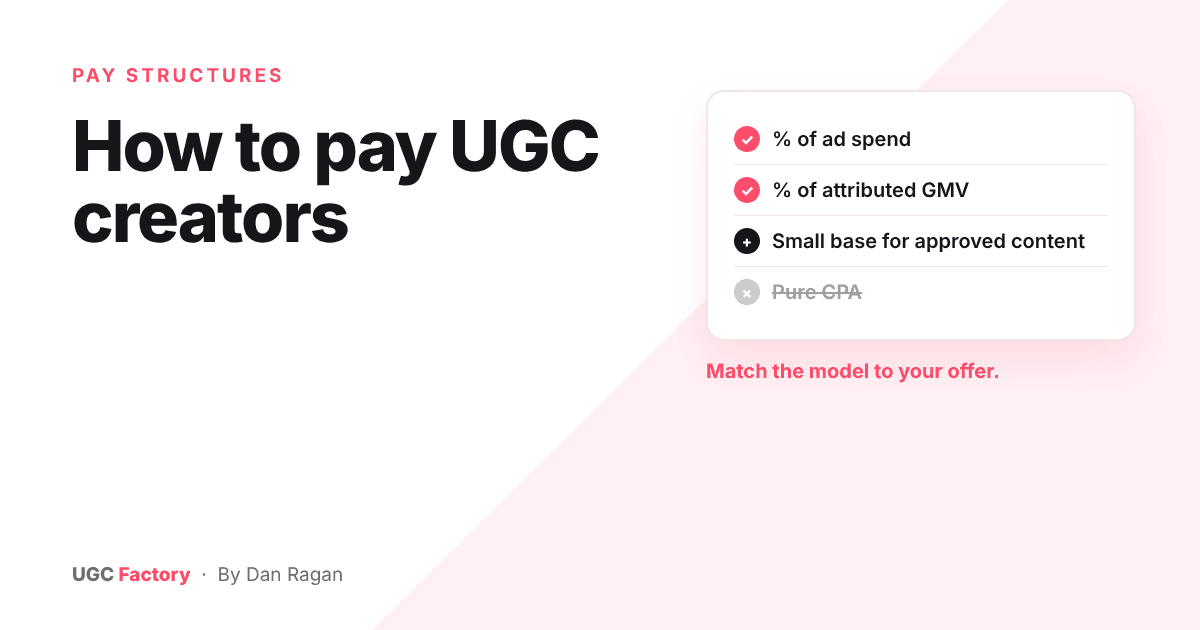
The fee is the small part. The real cost of a program is creator commission plus the ad spend behind the content. A 1.5% fee on $100,000 of attributed sales is $1,500; a 10% creator commission on the same sales is $10,000.
Terms to read before you start: content rights depend on how you pay (flat-fee content is yours once paid; commission content is licensed while commissions are paid), there's a 12-month non-circumvention clause, connected ad accounts stay connected for 12 months after a campaign, and a creator's commission rate locks per program. None of this is unusual for a marketplace. It does mean you should settle your pay structure before inviting creators. (Not legal advice.)
Who should use Trybe
A strong fit if you sell on Shopify and scale with Meta, already spend enough to give creator ads a real test, want to pay creators on performance, and have someone to brief, coach and motivate creators every week, in-house or through a partner.
A weaker fit if you live mainly on TikTok Shop, aren't spending enough to test creator content, or expect the platform to run the program for you.
Read next: Trybe vs. a UGC agency vs. a managed creator bench and our Trybe program from zero, with real numbers.
FAQ
Does Trybe work?
Yes, as infrastructure. It handles onboarding, submissions, partnership ads, attribution and payouts well. Results depend on strategy, creator management and ad spend.
How much does Trybe cost?
Free to start, then 1.5% of attributed sales, 1.25% of ad spend or 1.5% of flat creator pay, never stacked, as of late October 2026.
Is Trybe the same as TRIBE?
No. Trybe (jointrybe.com) is a performance UGC platform. TRIBE (tribegroup.co) is a separate influencer marketing platform.
Can an agency run my Trybe program?
Yes. Trybe lists partner coaches, strategists and agencies inside the app. A partner handles creator selection, briefs, feedback, editing and motivation while Trybe handles the plumbing.
Do creators need followers to earn on Trybe?
No. Content runs as ads from the brand's account with the creator's identity, so ad performance matters, not follower count.
About Dan Ragan
Dan Ragan has spent his career going where it's hard to scale. He ran live-streaming activations for brands like Bose, Marriott and Warner Bros, then founded UGC Factory, which has made creator ads for about 1,000 DTC brands and now runs on an AI back end with two full-time employees. His newest work takes the creator commission model off the screen: paid ambassadors running in-person demos, filmed on Meta glasses and paid on the sales they start. He's proving it on BASSCRAFT, the haptic bass seat cushion he co-founded, and building it into POV Factory for other brands. He lives in Austin and also owns Soundhouse ATX.