The Day-60 Cliff: Why Creator Commission Programs Stall
Most creator commission programs launch strong and go quiet in month two. Here is why it happens and the playbook that keeps creators submitting.
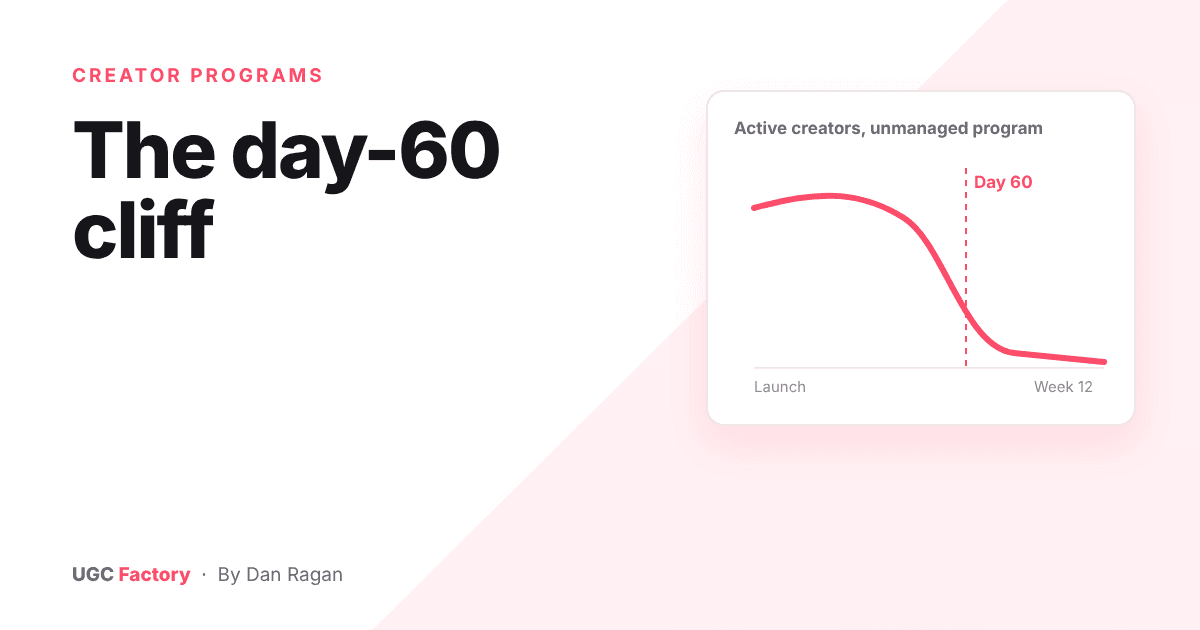
Table of Contents
Launch week of a creator commission program feels great. Creators sign up, samples ship, the first submissions roll in, and the dashboard finally has something on it.
Six to eight weeks later, it's often quiet. Submissions slow to a trickle. The creators who were excited in week one haven't posted in a month, and the brand starts to wonder whether commission creators "work."
We call this the day-60 cliff. It's a pattern we've seen across creator programs on every kind of platform, not a measured statistic, and it's avoidable.
The short answer: commission programs stall in month two because creators' first ads rarely pay right away, nobody explains why or what to try next, and their motivation runs out before the income shows up. The platform keeps running. The people stop. Programs that clear the cliff have someone managing creators like a sales team: feedback on every submission, visible proof that creators are getting paid, and a steady supply of angles worth filming.
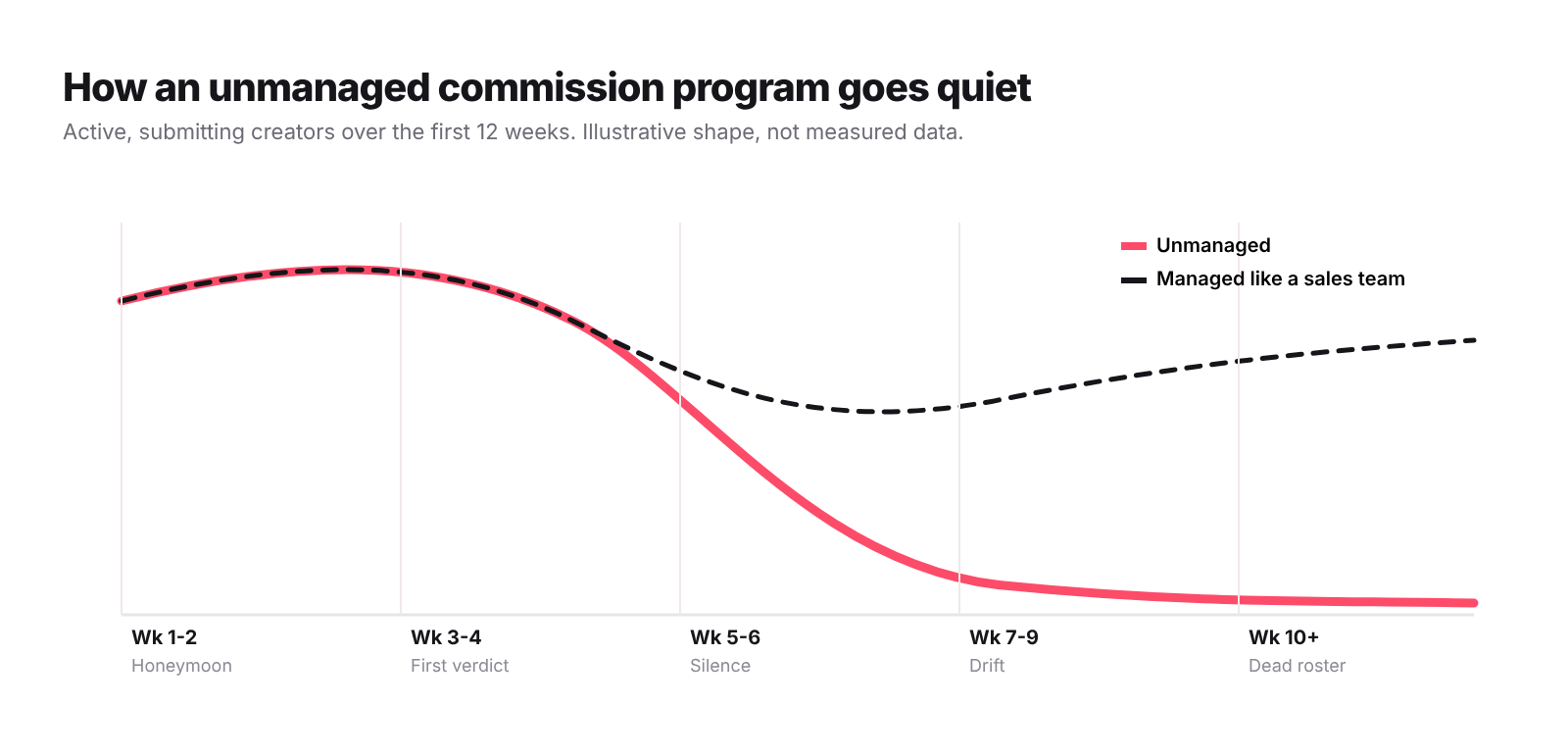
How the cliff unfolds
The timing varies by brand and category. The order doesn't.
Weeks 1 to 2, the honeymoon. Creators join, request samples and film their first ads. Everything is new and the upside feels unlimited.
Weeks 3 to 4, the first verdict. The first ads go live. A few spend. Most don't. Creators check earnings and see small numbers or nothing.
Weeks 5 to 6, the silence. Nobody tells creators why their ads didn't scale or what to try instead. They submit one or two more, mostly variations of what didn't work.
Weeks 7 to 9, the drift. A steadier brand or a flat-fee gig shows up, and creators follow the money they can see.
Week 10 and on, the dead roster. The creator count looks healthy. Active submitters are a fraction of it.
None of this is the platform's fault. Every stage is a people problem.
The five causes
1. The income gap. Commission pays after the ad works. A creator used to getting paid on delivery has to wait weeks for the first real payout, and that's where most of them quit.
2. No feedback loop. "Rejected" or silence teaches a creator nothing. They need to hear which hook held attention, which claim the brand can't make, and what's winning right now.
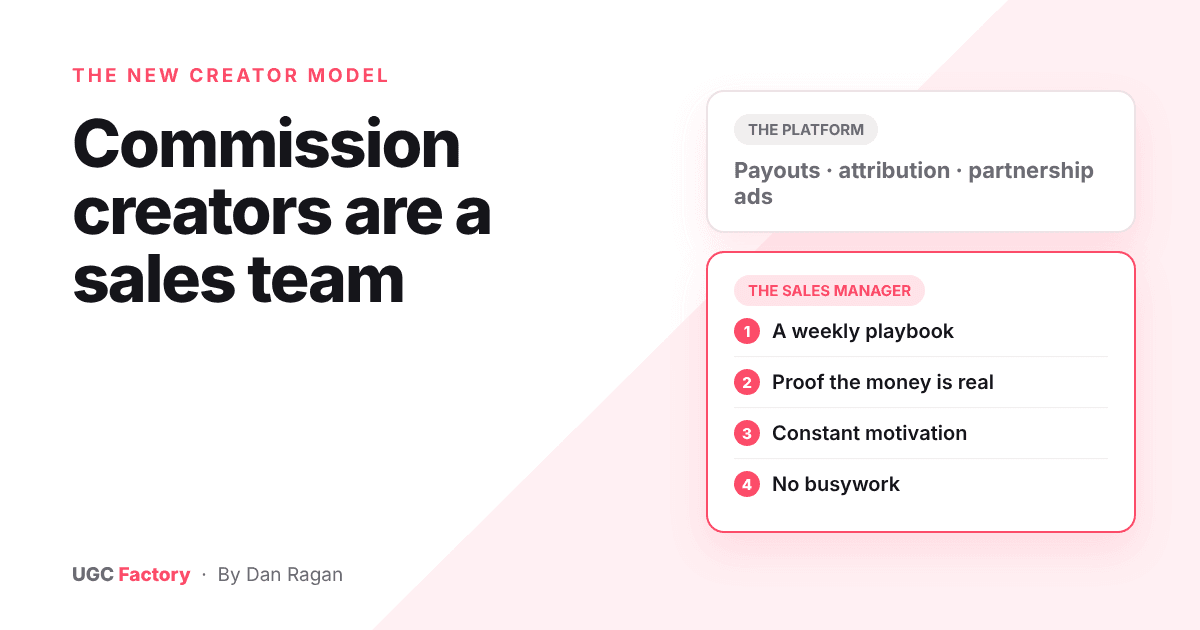
3. No proof. Salespeople stay in the game when they see a peer close a big deal. If no one in the program is visibly earning, every creator assumes the program doesn't pay.
4. Ads that never get budget. If the media buyer tests an ad at a tiny budget and kills it, the creator sees zero and never learns it was barely tested.
5. Too much busywork. Editing, versioning, brief hunting and brand chat eat the time creators would spend filming.
What TikTok Shop already taught us
We've seen this movie before. When TikTok Shop's affiliate program opened up, early movers did incredibly well. Then the market caught up: more creators, more brands, more competition for the same feeds. Creators who had never worked on commission burned out fast. What survived were the operations that treated it as a sales floor: affiliate managers who knew their top sellers by name, steady product, steady feedback, and a constant drumbeat of who's winning and why.
Operators say this out loud. Avenue Z's Jonathan Snow put it simply: getting affiliates to post once is easy, keeping them posting is how you scale (Superfiliate).
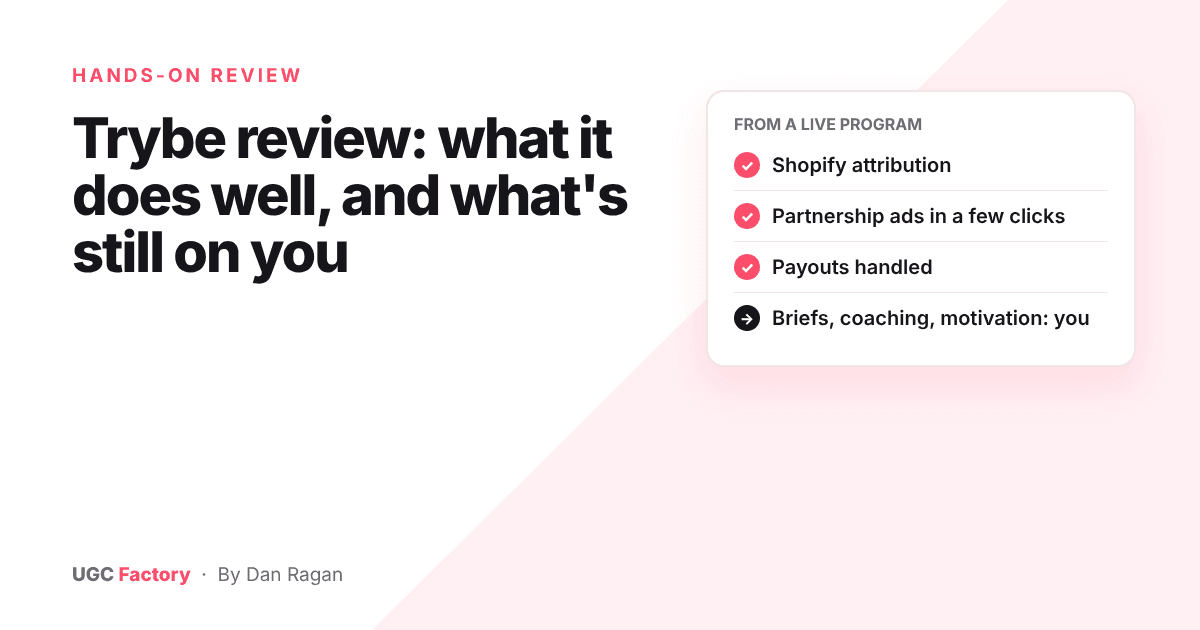
Meta partnership ads with commission creators are at that same early moment now, with Trybe leading the way. The first brands in are seeing great results. The lesson isn't that commission doesn't work. It's that commission is a sales model, and sales models run on management.
The prevention playbook
Each fix maps to one of the five causes. Start in week one, not after the program goes quiet.
Close the income gap
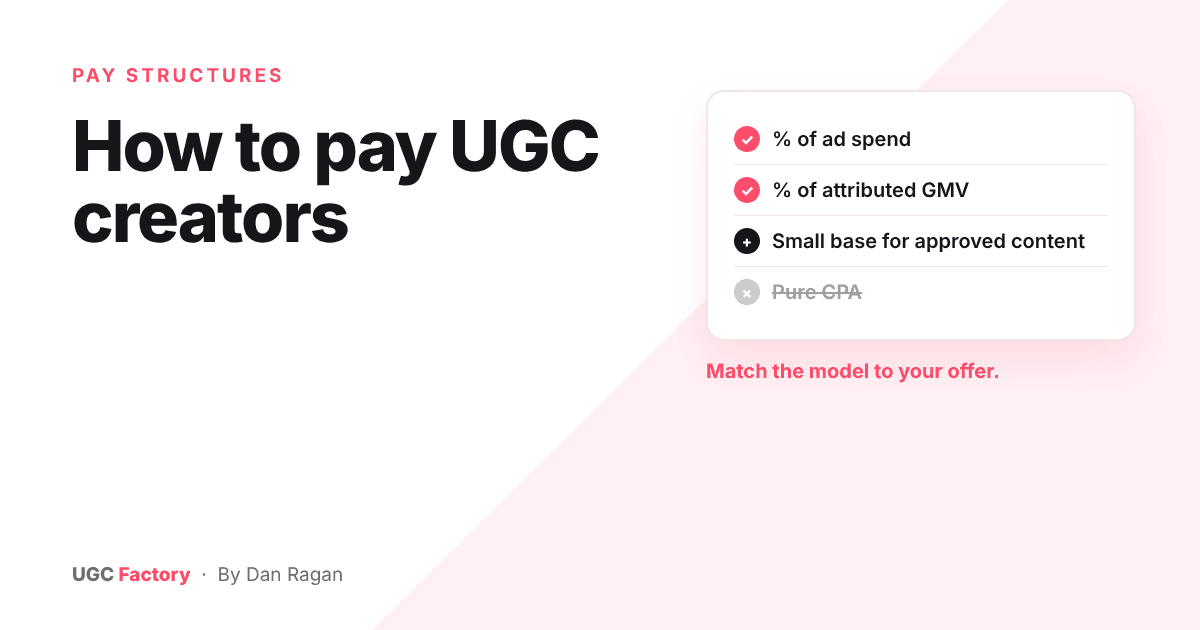
Pay a small base for approved content so creators earn something before commission kicks in.
Set expectations at onboarding: first ads are tests, the money comes from what scales.
Build the feedback loop
Give a specific note on every submission: what worked, what to change, what to try next.
Share a short weekly brief with the angles and hooks winning in the account.
Make the proof visible
Call out wins each week, with the creator's permission: which ad scaled and why.
Show total program earnings, not just each creator's own number.
Put budget behind the content
Agree with the media buyer on a minimum test budget per new creator ad.
Tell creators when an ad was tested and how it did, so a zero means something.
Strip out the busywork
Ask creators for raw footage and handle editing and versioning centrally.
Give each creator one point of contact.
Manage the roster like a team
Keep a small core of committed creators and a bench behind them.
Review monthly: rest the tired, bench the inactive, promote the hot.
Read next: Commission creators are a sales team and how to pay UGC creators.
FAQ
Why do creator commission programs fail?
Most fail from neglect, not bad software. Creators' first ads rarely pay right away, they get little feedback, and their motivation runs out before income arrives. Programs with active creator management survive that gap.
What is the day-60 cliff?
The point, usually in a program's second month, when submissions drop sharply because early enthusiasm has worn off and commission income hasn't caught up.
My creator program has gone quiet. What should I do first?
Message every inactive creator with specific feedback on their last submission and one new angle to try, then share a recent win from another creator. Re-engagement starts with proof and direction, not a reminder to post.
Should I pay creators a base fee on top of commission?
Usually yes, especially early. A small base for approved content keeps creators going through the weeks before commission pays.
About Dan Ragan
Dan Ragan has spent his career going where it's hard to scale. He ran live-streaming activations for brands like Bose, Marriott and Warner Bros, then founded UGC Factory, which has made creator ads for about 1,000 DTC brands and now runs on an AI back end with two full-time employees. His newest work takes the creator commission model off the screen: paid ambassadors running in-person demos, filmed on Meta glasses and paid on the sales they start. He's proving it on BASSCRAFT, the haptic bass seat cushion he co-founded, and building it into POV Factory for other brands. He lives in Austin and also owns Soundhouse ATX.