How to Pay UGC Creators: % of Ad Spend vs. % of Sales vs. CPA
Flat fee, CPA, percent of ad spend or percent of sales? A practical guide to paying UGC creators, matched to your offer, with a worked example.
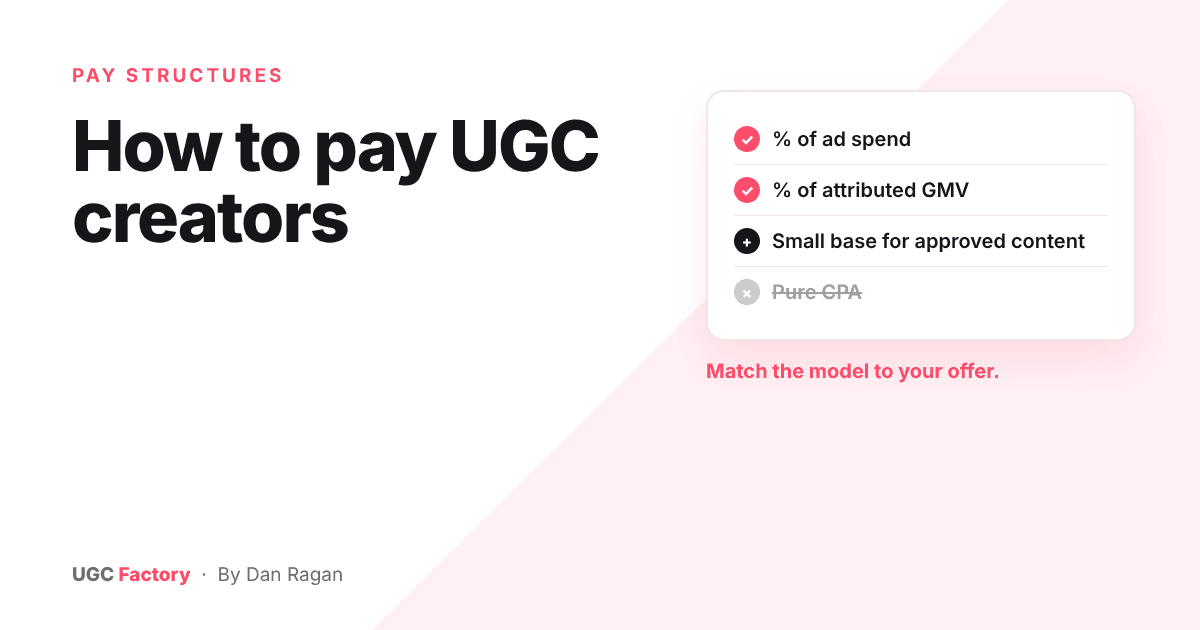
Table of Contents
How you pay creators decides which creators you get, what they make, and whether they stick around. Most brands pick a structure because it's the platform default or because it looks lowest-risk on paper. Both are the wrong reason.
The short answer: pay a modest base for approved content plus a commission, and choose the commission basis by your offer type. Subscription and low-ROAS offers should pay on a percentage of ad spend. Hard goods with healthy ROAS can pay on a percentage of attributed sales. Avoid pure CPA for creators: it underpays the first-touch video that feeds the algorithm, and the best creators won't take it.
The four ways to pay creators
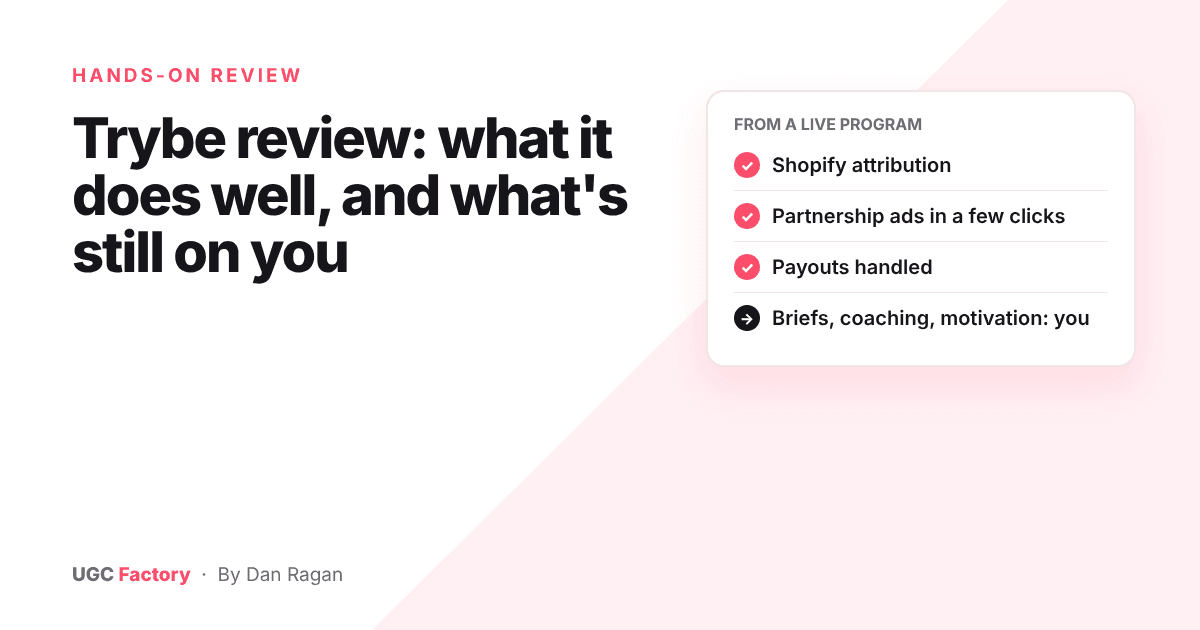
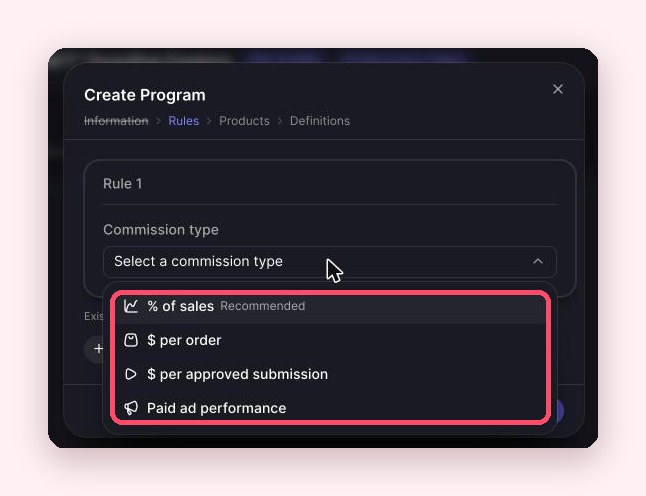
Every creator deal is some mix of four models. Trybe's program builder lays them out cleanly, which makes it a useful reference no matter where you run your program.
| Model | How it works | Brand risk | Creator risk | Best for |
|---|---|---|---|---|
| Flat fee per video ($ per approved submission) | Fixed payment on delivery | High | Low | Tests, launches, a quick batch |
| CPA ($ per order) | Fixed amount per attributed purchase | Low on paper | Very high | Rarely the right fit for paid UGC |
| % of ad spend (paid ad performance) | Share of what the brand spends behind the creator's ads | Medium | Medium | Subscriptions, telehealth, low-ROAS and multi-step offers |
| % of attributed sales (% of sales) | Share of sales the creator's ads drive | Low to medium | Medium | Hard goods with healthy ROAS and clean attribution |
Strong programs usually combine one of the bottom two with a modest base. The base covers production and keeps creators going while commission ramps up. The commission is where the upside lives.
Why CPA underpays creators
CPA looks perfect from the CFO's chair: no sale, no cost. The problem is how paid social works. The algorithm needs content that stops the scroll and pulls new people into the funnel, and that's usually creator video. But the ad that gets last-touch credit is often something else: a static, a retargeting ad, a branded search click.
So a creator's video can do the hard work of introducing the customer and still get credit for very few of the sales. The creator sees their ad everywhere, sees it spending, and sees a small commission. Experienced performance creators figure this out and turn CPA deals down.
Spend is the cleaner signal. A media buyer doesn't keep spending on an ad that isn't helping the business. If budget is flowing to a creator's ad, it's earning its place, last click or not.
Ad spend or sales: match it to your offer
Pay on % of ad spend when
You sell a subscription, where the first order is small and the value comes later.
Your target ROAS on the first purchase is around break-even.
The purchase path has several steps (quiz, consult, approval), so last-touch attribution undercounts creators.
Pay on % of attributed sales when
You sell hard goods with a healthy first-order ROAS.
Your store and attribution are clean, for example Shopify orders tied back to the ad.
Creators can see sales land, which keeps them motivated.
Two rules apply to both. If you pay on sales for a subscription product, include a share of repeat revenue, or you're paying the creator for the cheapest order and keeping the lifetime value. And agree on attribution in writing before the deal starts: which tool, which window, and what happens when numbers disagree.
A worked example
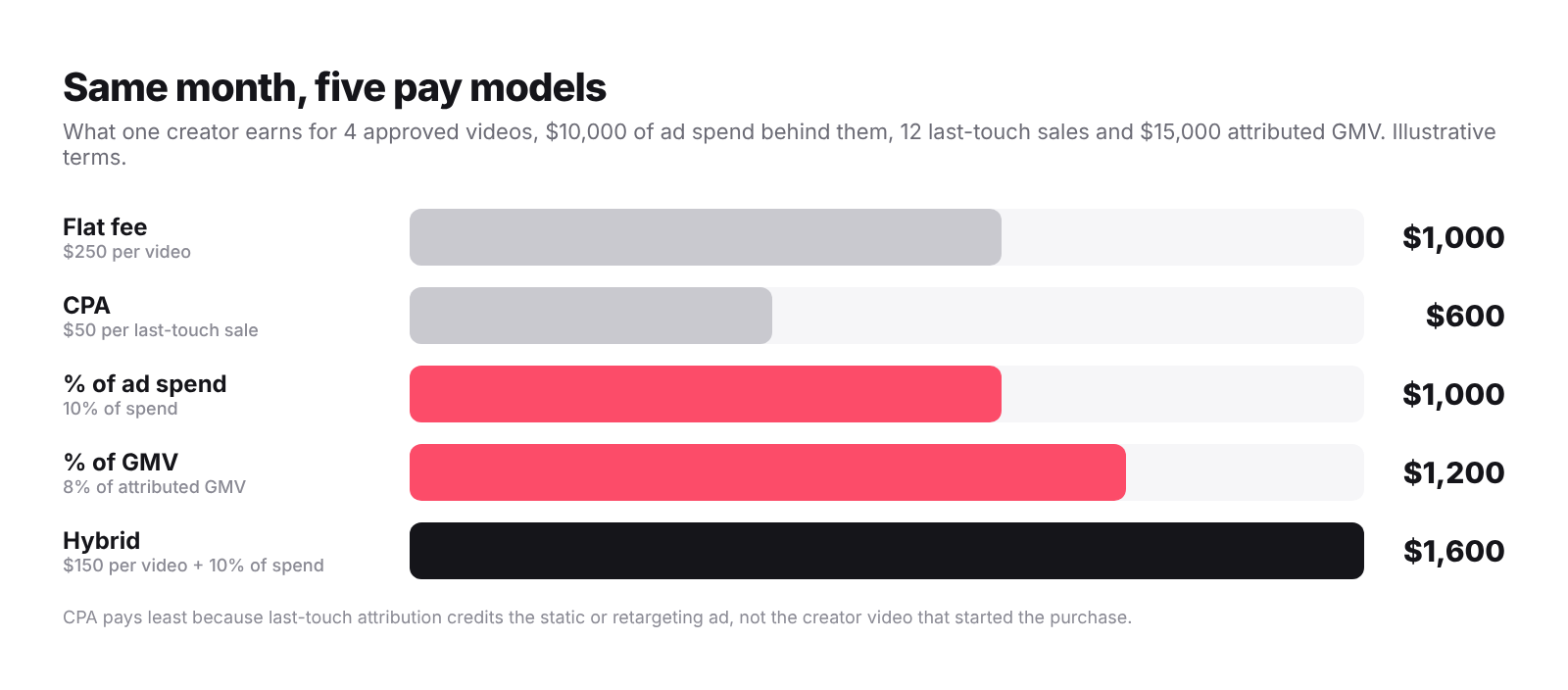
The hybrid costs the brand more this month. It also keeps the creator filming next month, which is where the return is. If you run the program on a platform, add its fee on top. Trybe, for example, charges up to 1.5% of attributed sales or 1.25% of ad spend, never stacked (Socialync, checked October 23, 2026).
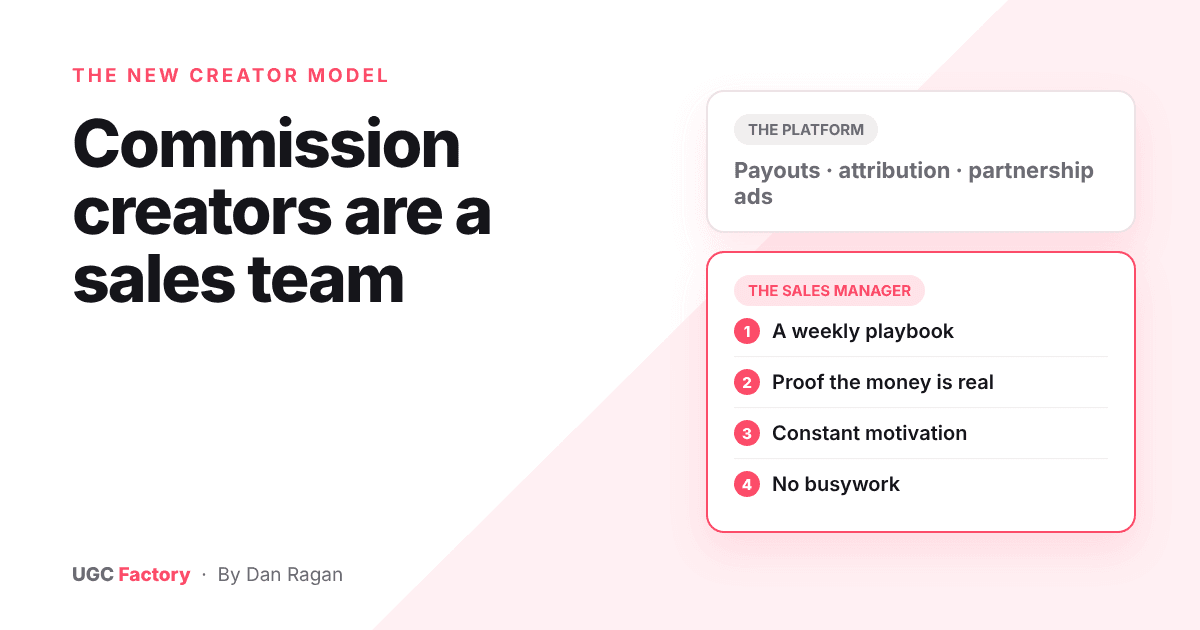
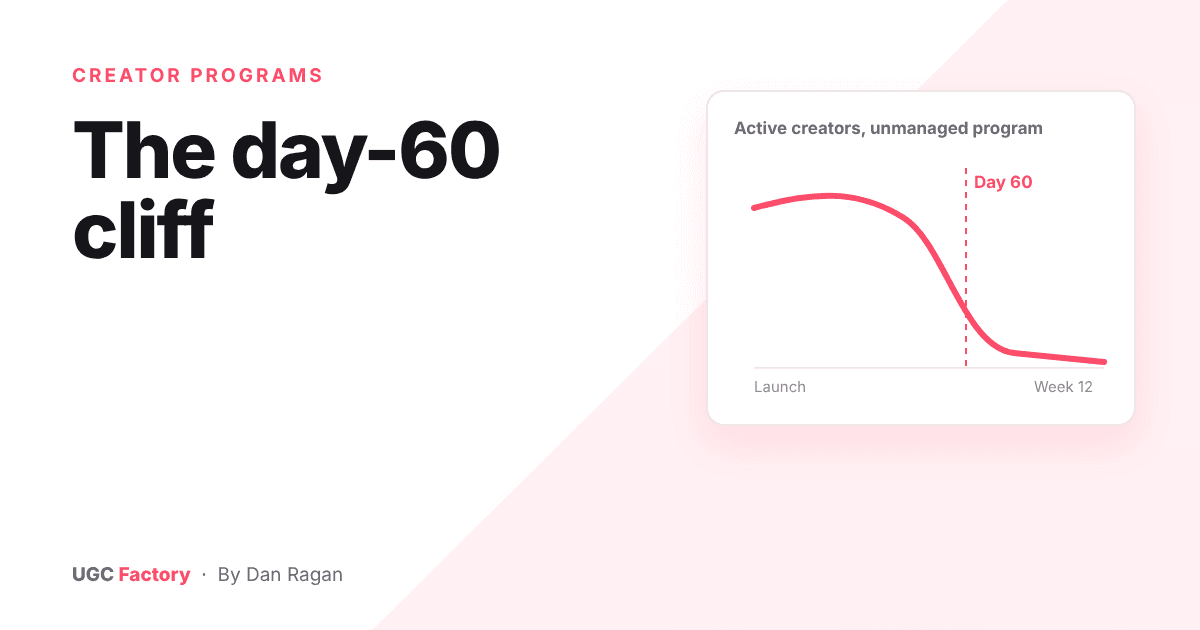
Read next: The day-60 cliff and Commission creators are a sales team.
FAQ
What is the best way to pay UGC creators?
For ongoing paid-social programs, a modest base for approved content plus a commission. Pay commission on ad spend for subscription or low-ROAS offers and on attributed sales for hard goods with healthy ROAS.
Should I pay creators on CPA?
Usually not for paid UGC. CPA credits only the last touch, so creator video that introduces customers gets underpaid, and experienced creators decline those deals.
What commission rate should I offer?
It depends on your margins, order value and how much spend you'll put behind creator content. Model what a strong creator would earn in a good month at your expected spend. If that number isn't worth their time, top creators won't stay.
How does Trybe handle creator commission?
Trybe lets brands build programs that pay on a percentage of sales, a fixed amount per order, a fixed amount per approved submission, or paid ad performance, then runs content as Meta partnership ads and pays creators through Stripe.
About Dan Ragan
Dan Ragan has spent his career going where it's hard to scale. He ran live-streaming activations for brands like Bose, Marriott and Warner Bros, then founded UGC Factory, which has made creator ads for about 1,000 DTC brands and now runs on an AI back end with two full-time employees. His newest work takes the creator commission model off the screen: paid ambassadors running in-person demos, filmed on Meta glasses and paid on the sales they start. He's proving it on BASSCRAFT, the haptic bass seat cushion he co-founded, and building it into POV Factory for other brands. He lives in Austin and also owns Soundhouse ATX.