Commission Creators Are a Sales Team. Treat Them Like One.
Platforms like Trybe made it easy to pay UGC creators on commission. What keeps a program alive is management: a playbook, proof and steady motivation.
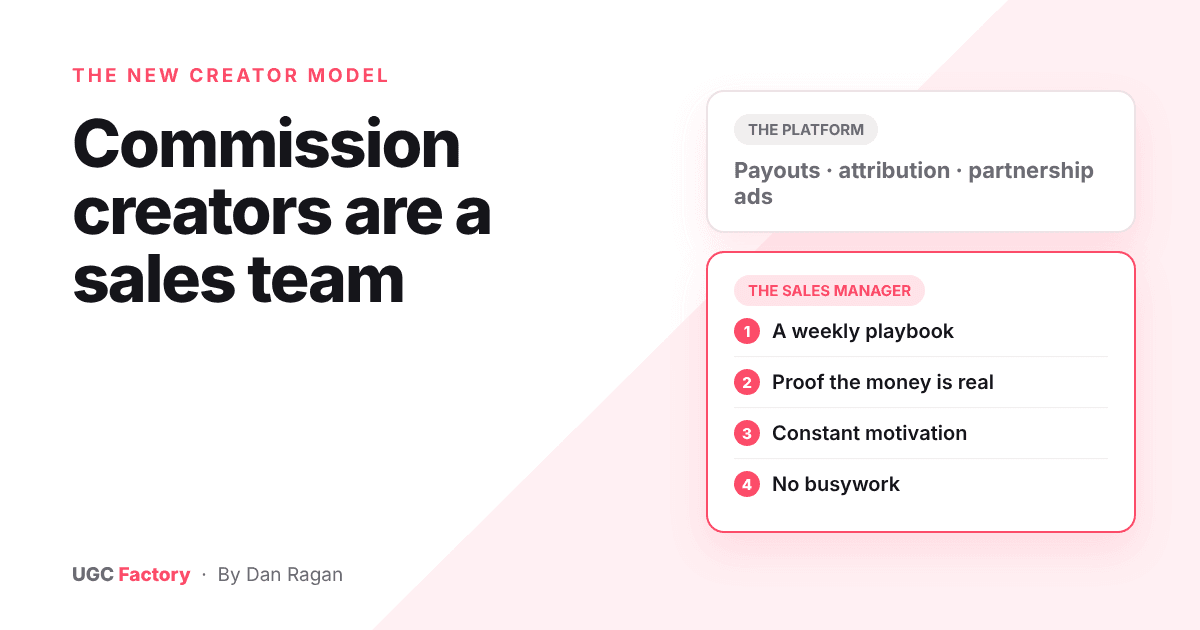
Table of Contents
The new creator programs are built on a simple idea. Stop paying creators a flat fee per video. Pay them a cut of what their ads sell.
Trybe made that easy, and the whole industry is better for it. You connect your store, connect Meta, create a program and invite creators. Within a week, creators can be submitting ads and earning commission. In cycling terms, Trybe is the rider pulling the pack right now, and the smart move for everyone else is to ride in that slipstream, not fight it.
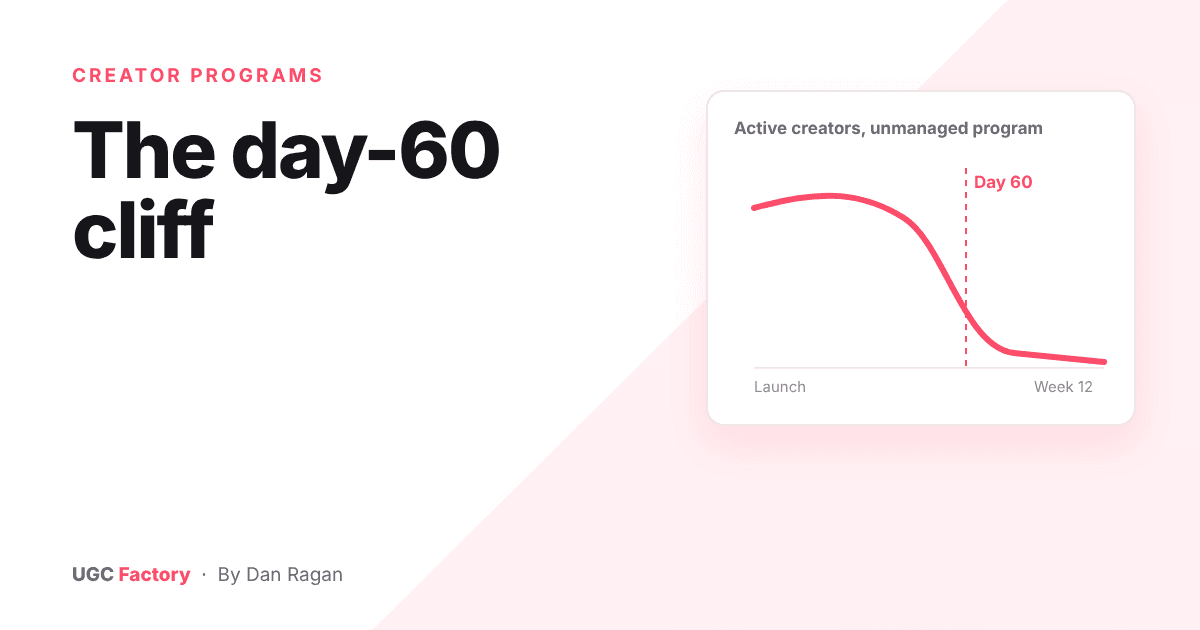
But there is a pattern worth knowing before you join the ride. Around the second month, a lot of these programs go quiet.
The short answer: commission creators are not a content vendor. They are a sales team. A sales team paid on commission needs what every sales team needs: a manager, a playbook, proof that the money is real, and steady motivation. The platform handles the payouts. Someone still has to do the managing. Brands that run their creators like a sales force keep them.
Why brands moved to commission creators
The flat-fee UGC model has a math problem. A creator paid a fixed amount per video makes more money by making more videos, not better ones. So you get volume. You don't always get winners.
Commission flips the incentive. When a creator earns a share of what their ads drive, the only thing that matters is whether the ad works. The best creators love this. They'd rather make fewer, better ads and get paid when those ads scale.
The brands doing this at scale show what's possible. Trybe founder Lukas Pakter has said he pays creators roughly 10% of the sales their ads generate on his own brand, runs about 8,000 creatives a month, and brought acquisition cost down from about $89 to $29 (Net Influencer). Part of that result is a founder who personally trains and motivates his creators. That part is easy to miss when you copy only the payout structure.
What a sales team needs on top of the software
There's an old line in sales: the easiest way to add a million dollars in revenue is to hire four people who each sell $250,000. Nobody who has run a sales floor hires those four people, hands them a login and walks away. Commission creators need the same four things salespeople do.
1. A playbook. Creators need to know which angles are working in the account right now, which hooks are winning for competitors, and what the brand can and can't claim. Without that, they guess, and guesses rarely get budget.
2. Proof that the money is real. Salespeople stay motivated when they see someone like them getting paid. A leaderboard helps. A manager saying "she had her best month off two ads, and here is exactly what she did" helps more.
3. Steady motivation. Commission income is lumpy, and a creator's first ads often don't scale. Someone has to say "that one didn't hit, here's the next angle" before they drift to another brand.
4. No busywork. The best creators want to create, not edit, research and chase brand chat. Strip that out and you get more, better submissions.
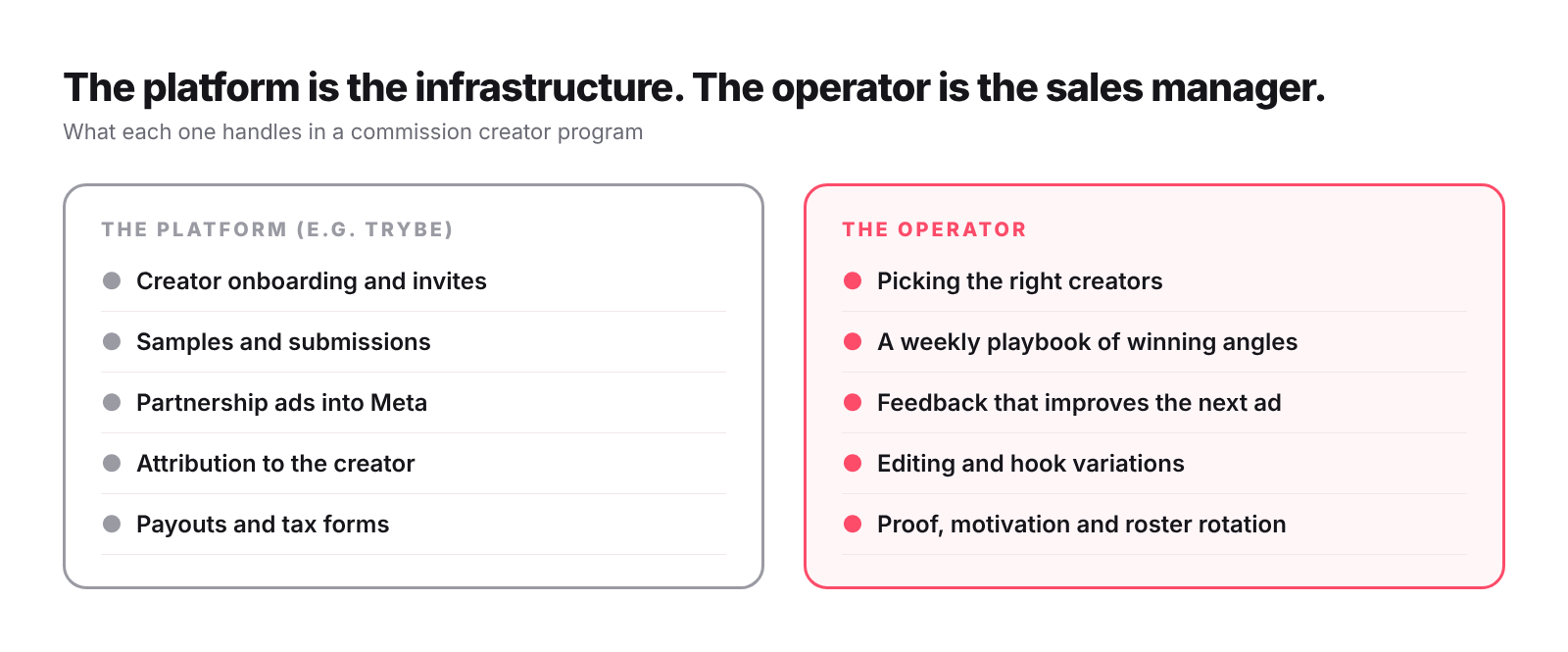
Trybe says the same thing
This isn't a knock on the platform. Trybe built it into the product. Open the Partners tab in a Trybe brand account and the first thing you see is "Scale your creator program with a partner," with a marketplace of 74 vetted coaches, strategists and agencies when we checked in November 2026.
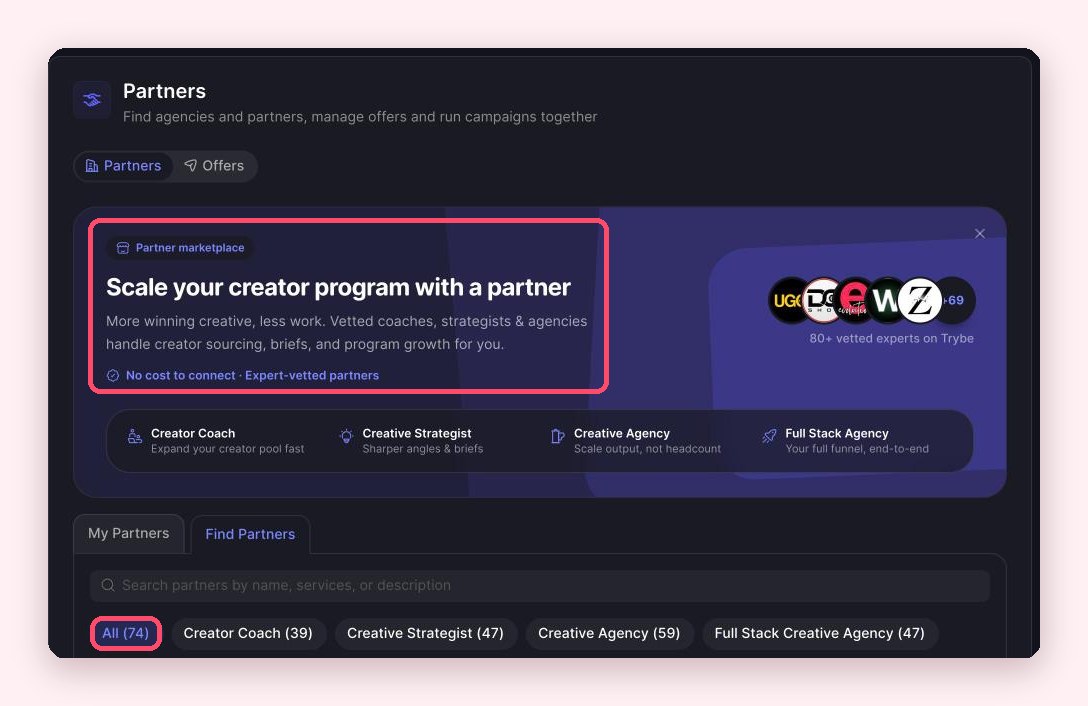
The platform team knows what operators know: software gets a program started, and people keep it running.
The starting five
The instinct with commission is to recruit as many creators as possible, since commission is "free" until it pays out. But attention isn't free. A hundred loosely engaged creators produce a trickle of average ads. Five committed, talented creators who know the brand produce more winners.
The starting five are your core creators. They're on the hook for a set number of ads a month and get the best briefs and first look at new angles.
The bench is your wider roster. Creators prove themselves there, and the best move up.
Substitutions happen monthly. Someone tired gets a breather. Someone not producing comes out of the game. Someone hot on the bench gets the start.
This also fixes the thing creators hate most: hunting for new brands. Give a creator a steady, aligned brand and they stop spreading themselves across ten programs. Brands want the same consistency, which makes it the rare deal where both sides want the same outcome.
When it works
Three things have to line up, no matter how good the platform is.
A brand that's actually spending. Commission on ads that never get budget is zero, and creators can tell which brands spend.
A strategy that fits the channel. Creators need to know what wins on Meta, not just what got views on TikTok.
Talented, motivated creators. The right people, kept going by proof and attention.
Get all three right and creators stop acting like vendors. They act like a sales team that happens to work in video.
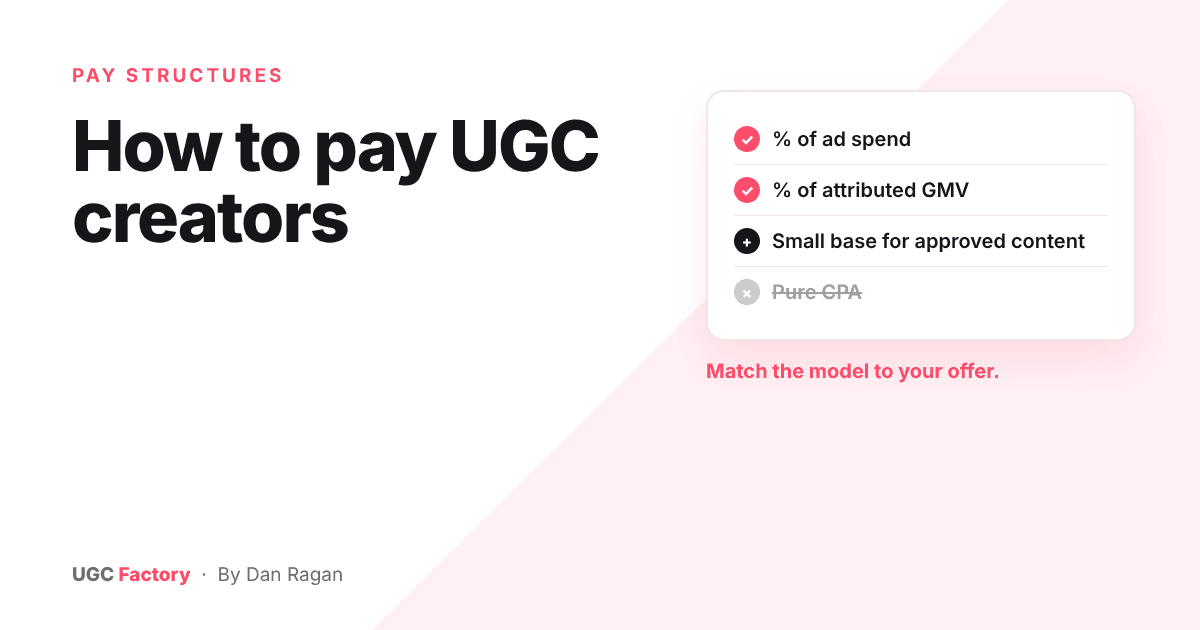
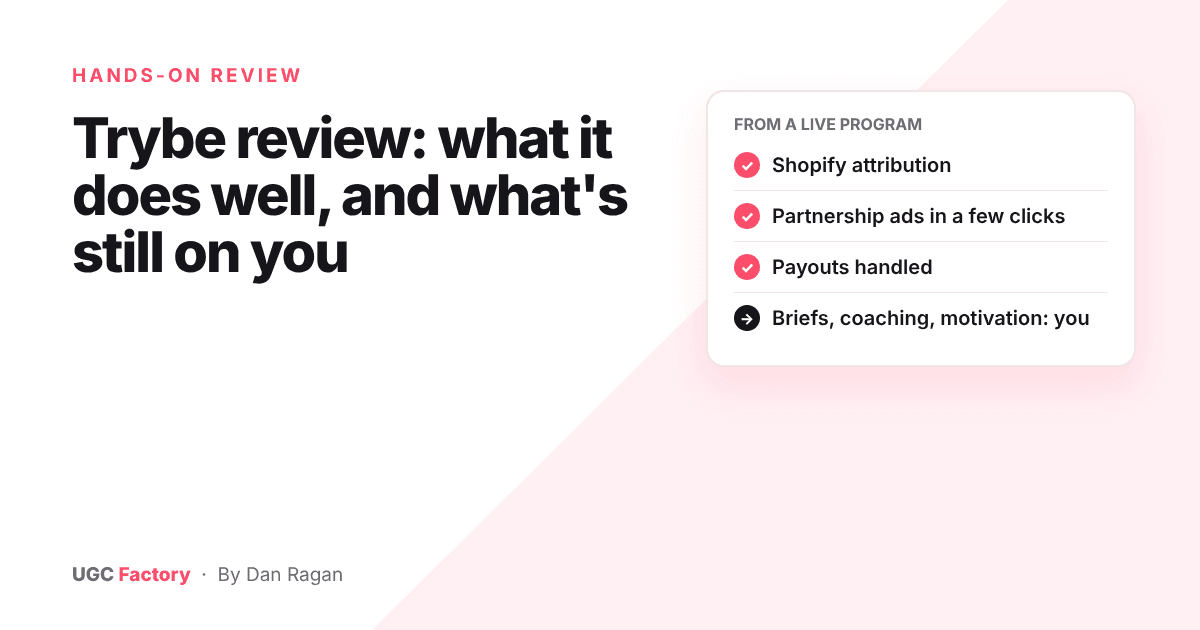
Related reading: The day-60 cliff, How to pay UGC creators and our hands-on Trybe review.
FAQ
What is a creator sales force?
A group of creators paid on commission to make ads that sell a brand's products, managed like a sales team rather than hired like a content vendor.
Does Trybe work?
Trybe works well as infrastructure: creator onboarding, submissions, Meta partnership ads, attribution and payouts. Results depend on what happens around it, mainly creator management, strategy, and real ad spend behind the content.
Do I need an agency if I use Trybe?
Not always. If someone in-house can brief creators, give feedback, edit variations and keep creators motivated every week, you can run it yourself. If not, a partner fills that role, which is why Trybe lists partners in the app.
How many creators should a commission program have?
Fewer than most brands think. A small core of committed creators, backed by a bench, usually beats a large roster of loosely engaged ones.
About Dan Ragan
Dan Ragan has spent his career going where it's hard to scale. He ran live-streaming activations for brands like Bose, Marriott and Warner Bros, then founded UGC Factory, which has made creator ads for about 1,000 DTC brands and now runs on an AI back end with two full-time employees. His newest work takes the creator commission model off the screen: paid ambassadors running in-person demos, filmed on Meta glasses and paid on the sales they start. He's proving it on BASSCRAFT, the haptic bass seat cushion he co-founded, and building it into POV Factory for other brands. He lives in Austin and also owns Soundhouse ATX.