Arbitraging Impressions: The Cheapest Reach in 2026
The fastest-growing brands aren't buying the best impressions. They're buying the cheapest good ones. What impression arbitrage means and how to run it.
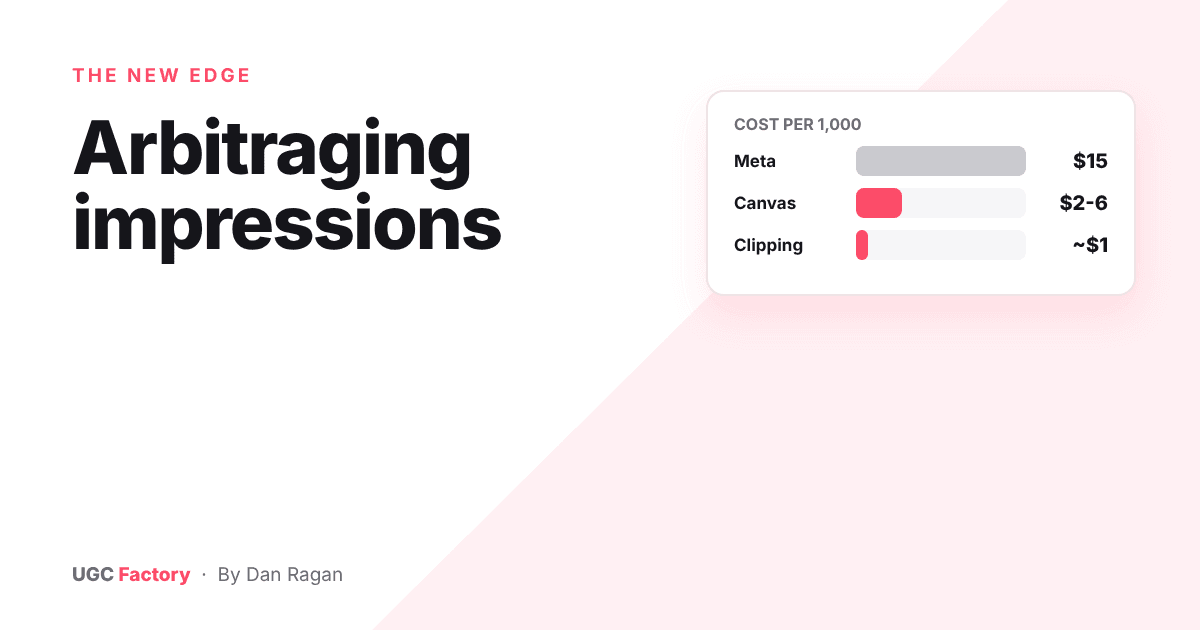
Table of Contents
At a Founders Only event in Austin this month I heard Greg LaVecchia, the CEO of Bloom, describe how they grew the brand: by arbitraging impressions. Find the places where attention is underpriced, buy as much of it as you can, and move before everyone else shows up. It's the clearest framing I've heard for where creator marketing is going.
What impression arbitrage means
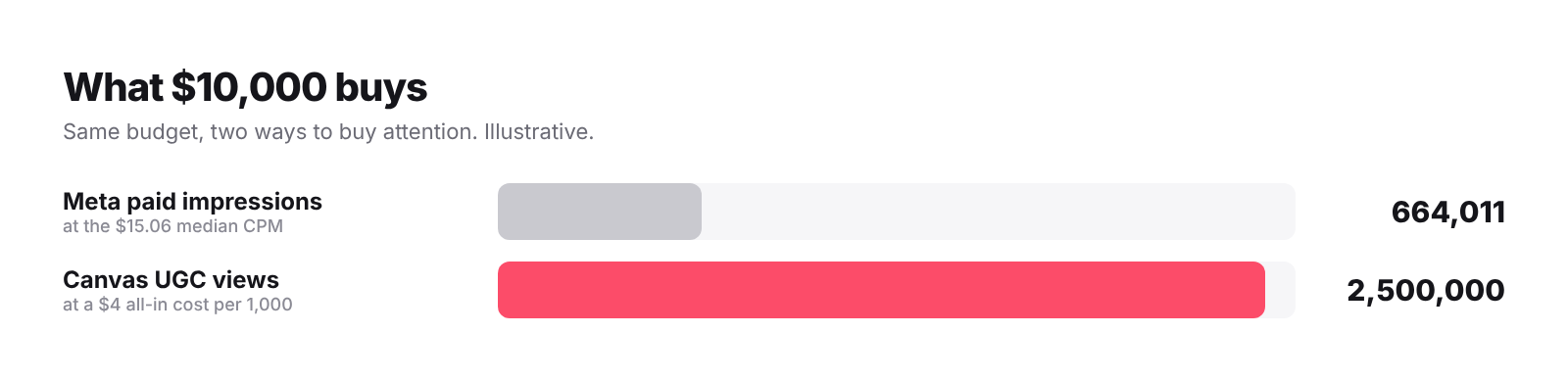
Every impression has a market price. On Meta, the median CPM for brands tracked by Triple Whale was $15.06 for the year to July 2026. Influencers usually charge above that, because you pay a premium for their audience. TikTok paid reach is cheaper, with a median CPM of $4.08 and falling (Triple Whale's TikTok benchmarks), so the arbitrage is biggest when Meta is your main paid channel. Arbitrage means buying reach that's priced below what it's worth to you, then using it to win.
How Bloom did it
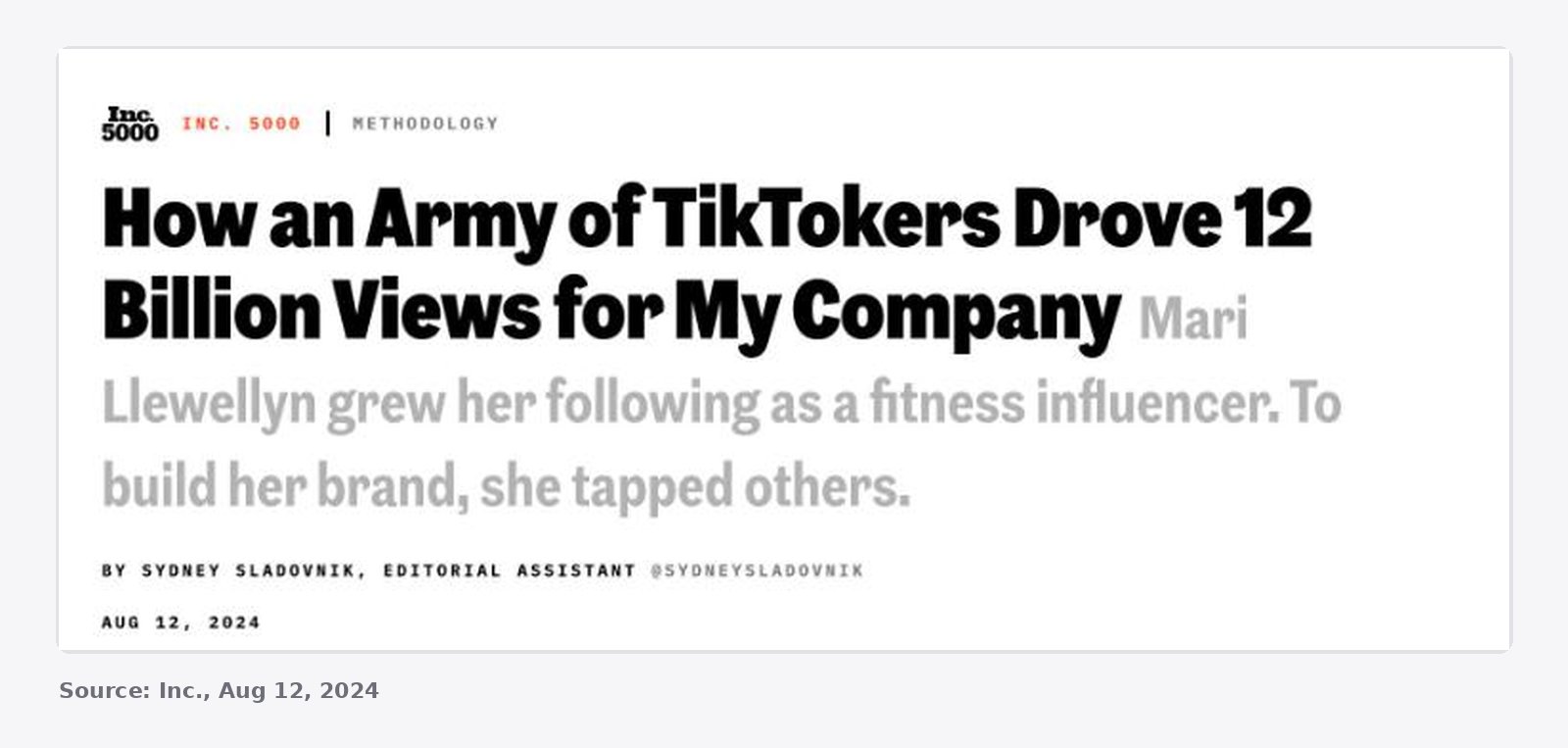
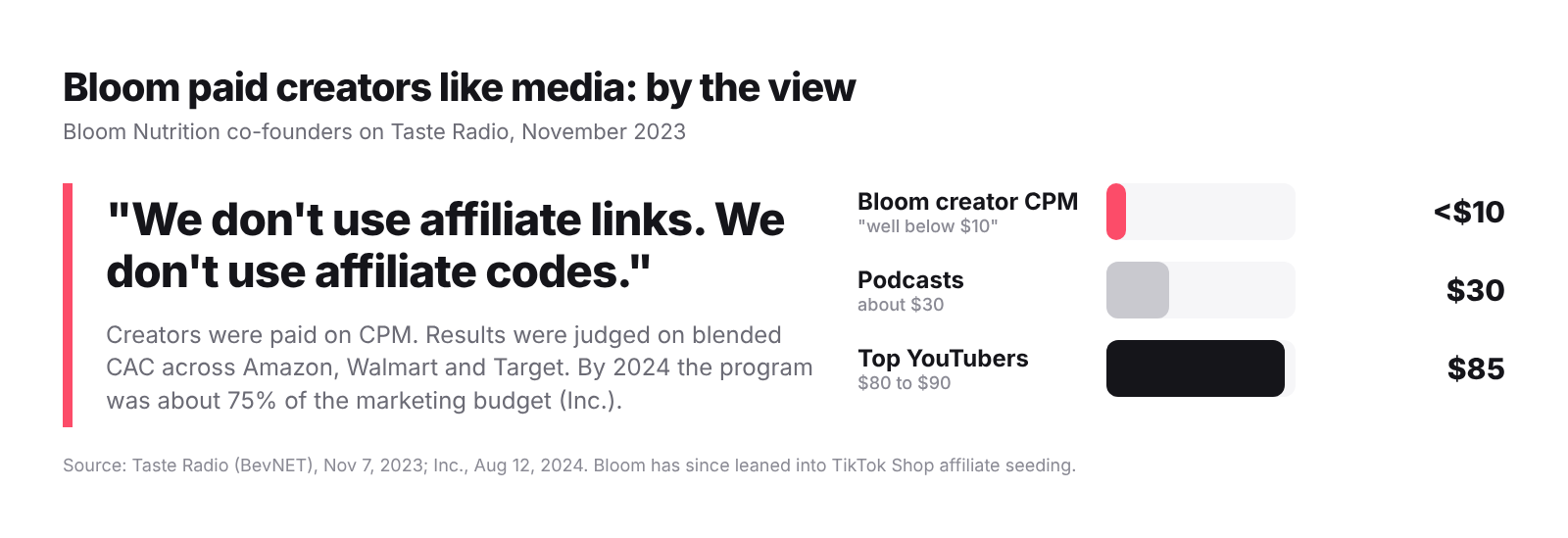
Bloom paid thousands of creators on a CPM "well below $10" in 2023, skipped affiliate codes, and judged results on blended customer acquisition cost across retail (Taste Radio). Inc. counted 5,600 creators and 12B+ views by 2024 (Inc.). That's impression arbitrage at scale: creator views bought far below what podcasts or top YouTubers charged per 1,000.
Where underpriced impressions live in 2026
Organic short-form from many accounts. Canvas UGC buys views at roughly $2 to $6 per 1,000 (ReelPilot).
Creators paid on output, not audience. The interest graph means a zero-follower account can reach millions if the content fits a niche.
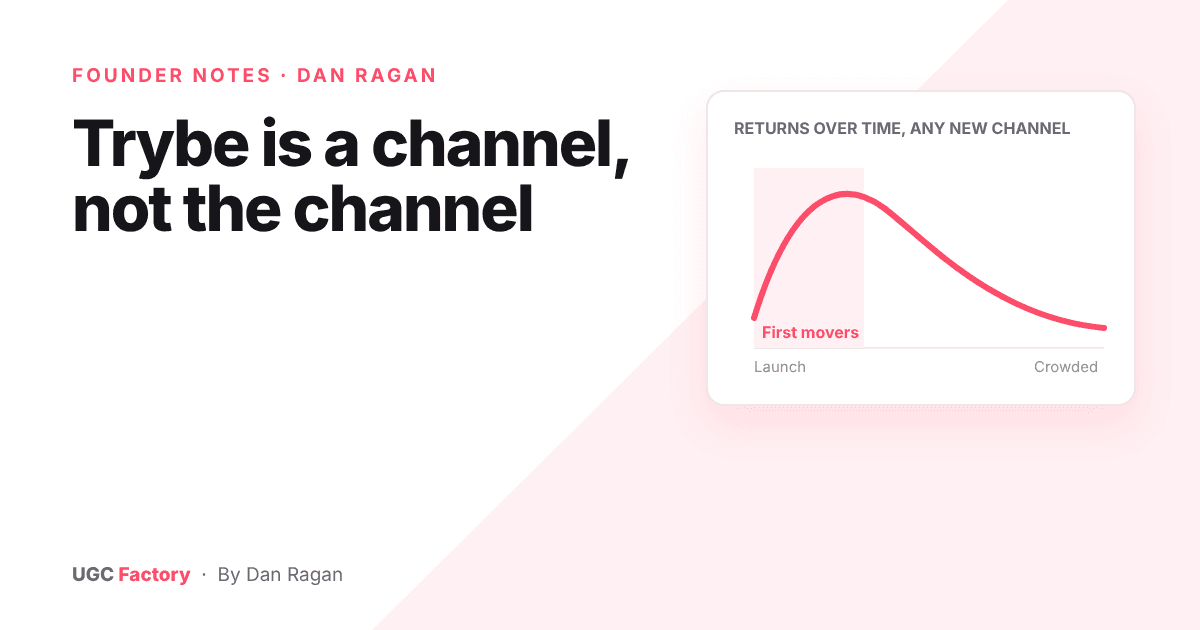
New channels before they're crowded. Early TikTok Shop and early commission platforms paid off for first movers. See why Trybe is a channel, not the channel.
In-person moments. Real demos produce footage and word of mouth no algorithm can price. See taking Trybe IRL.
Rules for running it
Measure cost per 1,000 views all-in, including base pay, editing and tools, not just the CPM rate.
Judge quality, not just quantity. Watch time and shares tell you if cheap reach is useful reach.
Convert winners to paid fast. The arbitrage pays off when organic winners become ads with proven hooks.
Expect the edge to close. Arbitrage gets competed away. Keep looking for the next underpriced channel.
Read next: why creator pay is moving to CPM.
FAQ
What does arbitraging impressions mean?
Buying attention where it's priced below its value to you, such as organic creator content at a low cost per 1,000 views, then using it to find and scale winning ads.
Is a canvas view worth as much as a Meta impression?
Not one for one. Paid impressions are targeted. Organic views are cheaper and give you creative signal. The value comes from using both together.
What's the average Meta CPM in 2026?
Triple Whale reported a median Meta CPM of $15.06 for August 2025 to July 2026 across its brands, up 13% year over year.
About Dan Ragan
Dan Ragan has spent his career going where it's hard to scale. He ran live-streaming activations for brands like Bose, Marriott and Warner Bros, then founded UGC Factory, which has made creator ads for about 1,000 DTC brands and now runs on an AI back end with two full-time employees. His newest work takes the creator commission model off the screen: paid ambassadors running in-person demos, filmed on Meta glasses and paid on the sales they start. He's proving it on BASSCRAFT, the haptic bass seat cushion he co-founded, and building it into POV Factory for other brands. He lives in Austin and also owns Soundhouse ATX.