I'm Taking Trybe IRL
Trybe put creators on commission. Dan Ragan is putting them on the street: paid ambassadors, in-person demos filmed on Meta glasses, and follow-up measured like paid media.
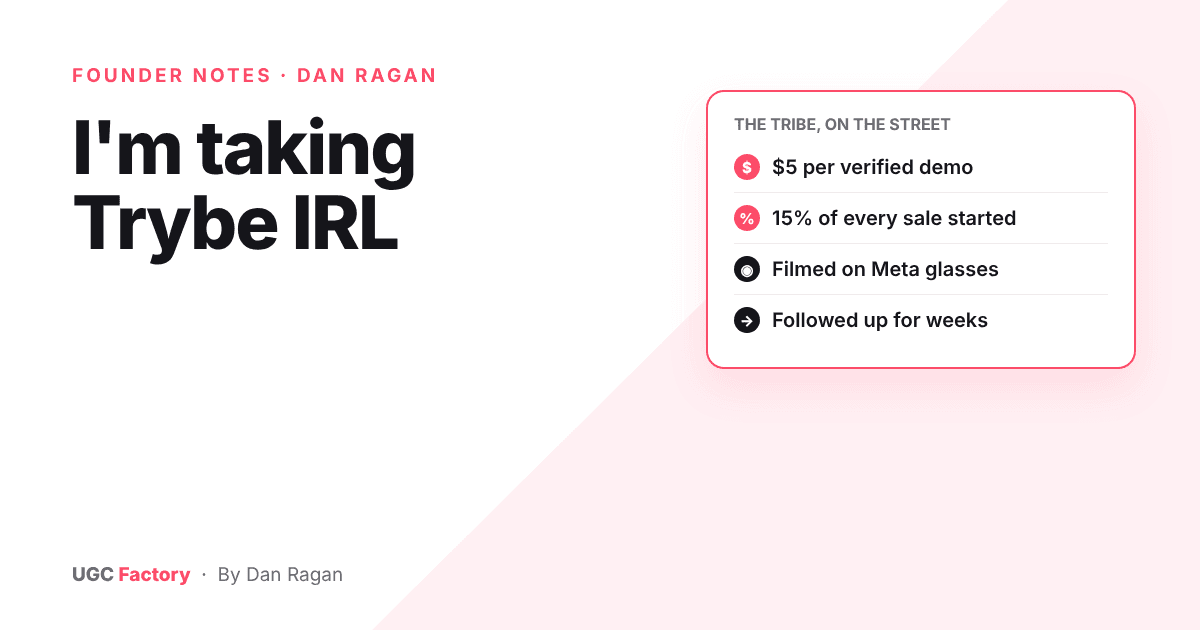
Table of Contents
Everybody in DTC is talking about Trybe right now, and they should be. Trybe proved something the creator economy needed proven: brands will pay creators on commission, and good creators will take the deal.
In cycling, when someone strong is pulling the pack, you don't fight them. You draft. You ride in the slipstream and use their momentum to go somewhere they aren't going. That's how I think about Trybe. It lives on a screen: a creator films at home, uploads, and the ad runs. I'm taking the same model into the real world.
Go where it's hard to scale
I've followed one rule my whole career. When something hard becomes easy, the value moves somewhere else.
First it was live streaming. I ran an agency doing live activations for brands like Bose, Marriott and Warner Bros, back when that was hard. Then it was UGC. I founded UGC Factory, and we've made creator ads for about 1,000 DTC brands.
Now AI has made the content part easy. Our AI editor cuts about ten videos a minute. Strategy runs on agents. I run the agency with two full-time employees.
So the value moved again. What's still hard? Getting a real product into a real person's hands, in person, at scale, and capturing that moment honestly. Most brands avoid it because an activation can cost $20,000 to $30,000 and is a logistics headache. That pain is the opportunity.
The Tribe, on the street
I'm building this first on my own hardware brand, BASSCRAFT™, a haptic bass seat cushion you feel through the seat.
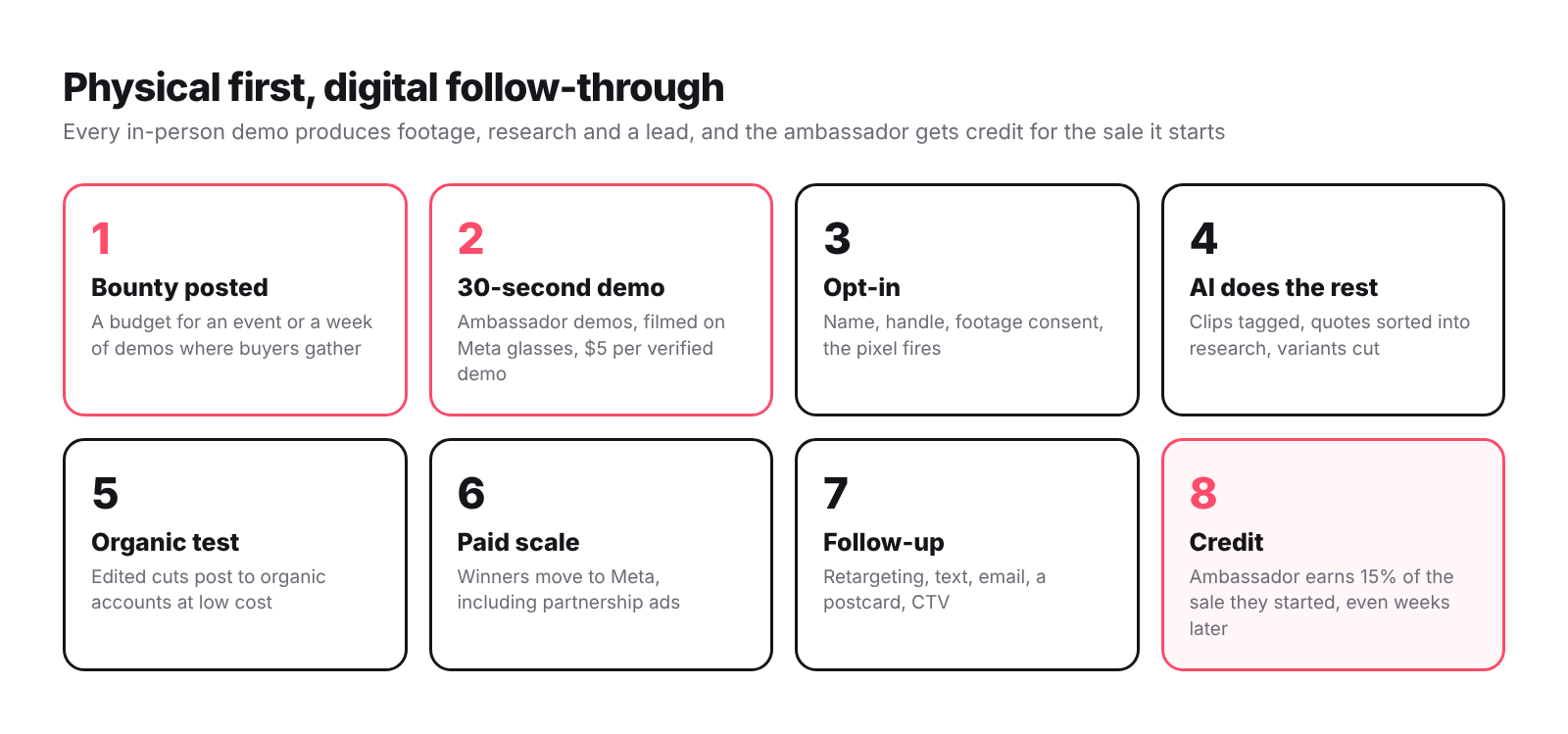
We built an ambassador program and we call it the Tribe. Ambassadors go anywhere there are cars: tailgates, car meets, parking lots. They give people a 30-second demo in the demo car. They get paid two ways: $5 for every verified demo and 15% of every sale they start. That's commission, like Trybe. The difference is the first touch happens face to face.
The application page went from idea to live in one day.
Every demo is footage
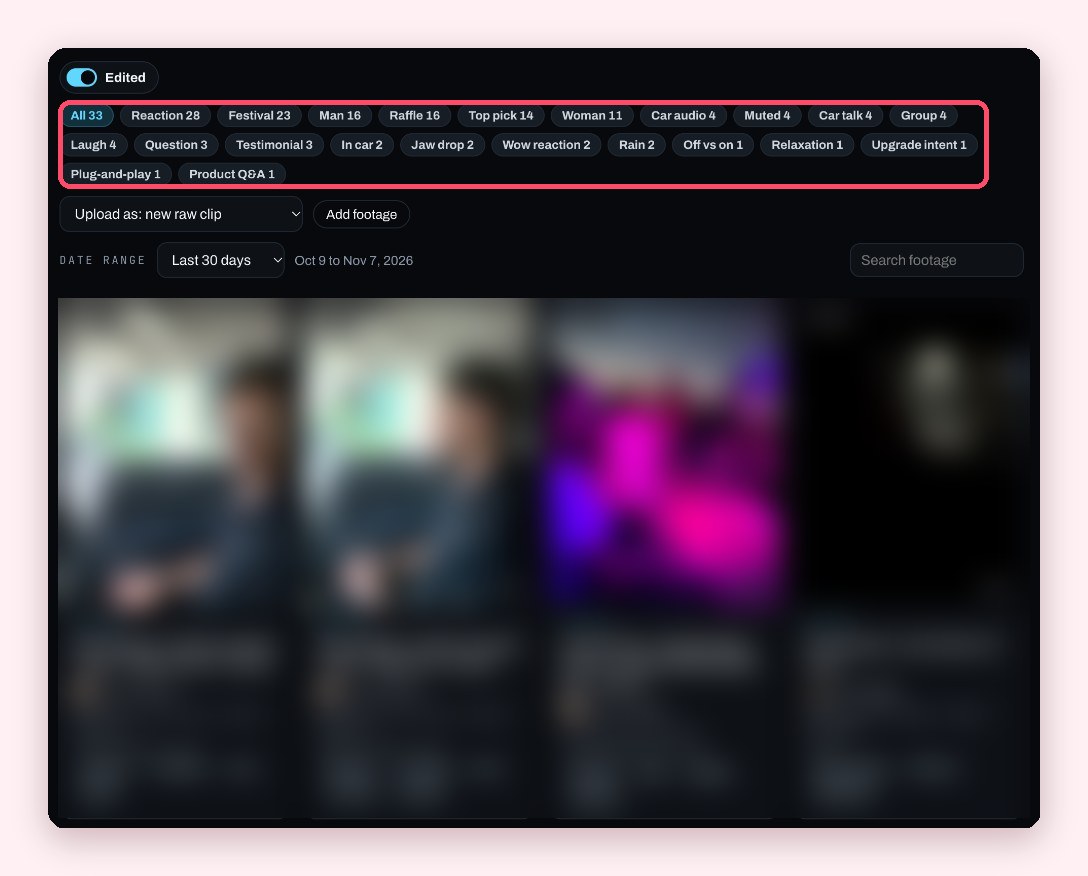
The demos are filmed on Meta glasses, not phones. I tested both. Put a phone in someone's face and they perform. Wear glasses and you get the real reaction: the jaw drop, the laugh, "wait, what is that?"
Scripted UGC is everywhere now, and AI content is everywhere. A real stranger reacting to a real product is the scarce thing. Between October 9 and November 7 we captured 33 clips without booking a single shoot, each one tagged automatically and one click from an edited cut.
Every conversation is research
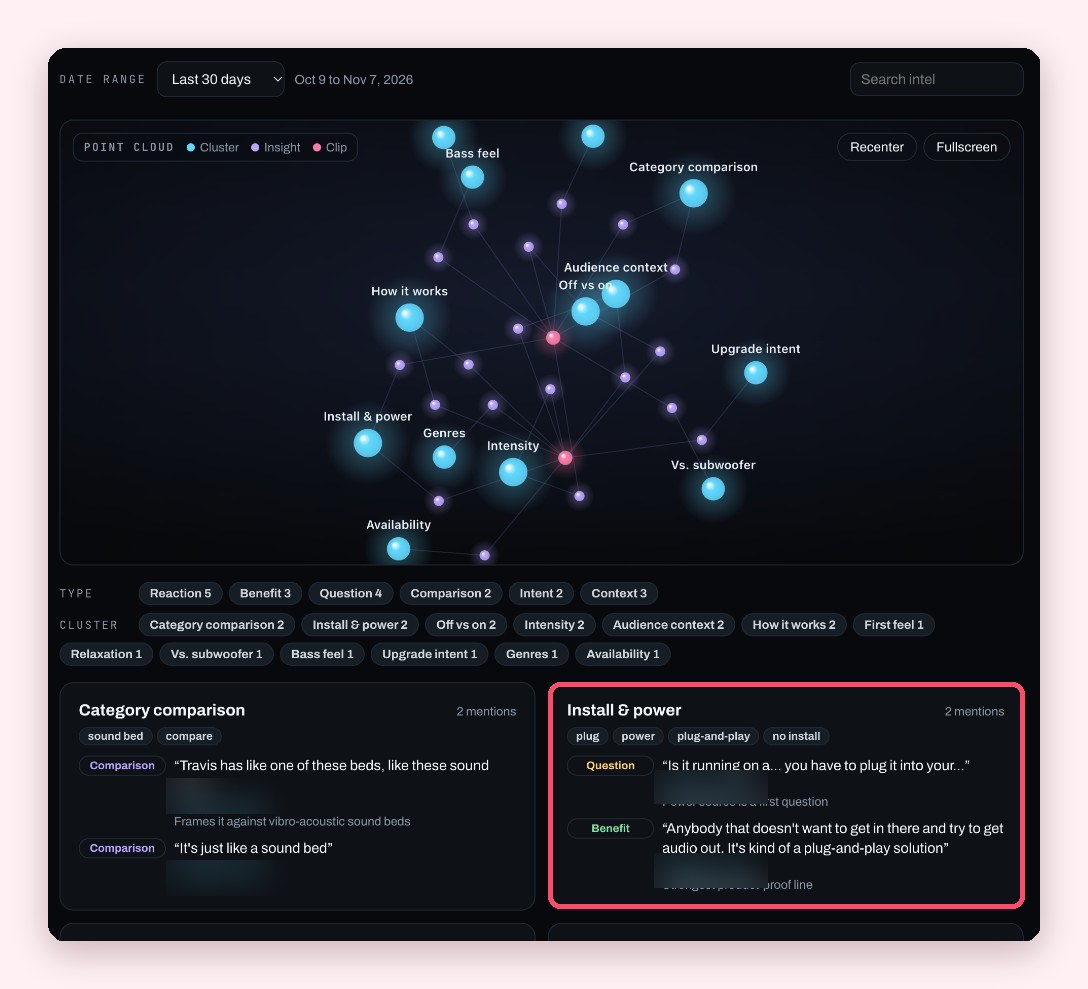
AI listens to every demo and sorts what people say into reactions, questions, comparisons and buying intent, then clusters it by theme: how it feels, how it installs, how it compares to a subwoofer. It's a focus group that runs every day in the real moment, and it writes our ad scripts and our FAQ.
Every demo is a lead
Most activations end when the person walks away. Ours don't. After the demo, people opt in for a chance to win, which ties them to the exact demo and the ambassador who started it. Then we follow up everywhere: social retargeting, text, email, a postcard to their door, even their TV. The ambassador gets credit for the sale they started, even if it closes weeks later. A last-click affiliate program can't do that. It works because the demo, the consent and the follow-up live in one system.
Measured like paid media
The question I get most: does IRL scale, or is it a fun stunt? Here's where we are, honestly. Fifteen verified demos between October 9 and November 7, mostly at one Austin event and all run by founders so far, at about $64 all-in per demo once you count event costs. Those numbers are early and small. They're also real, tracked by person, by event and by city, exactly like a paid channel.
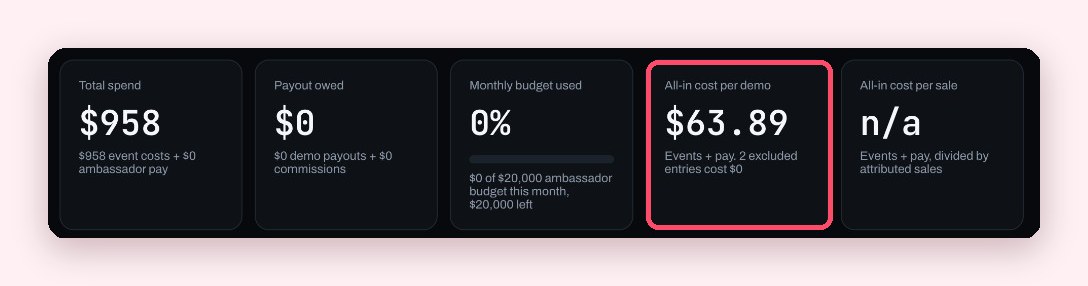
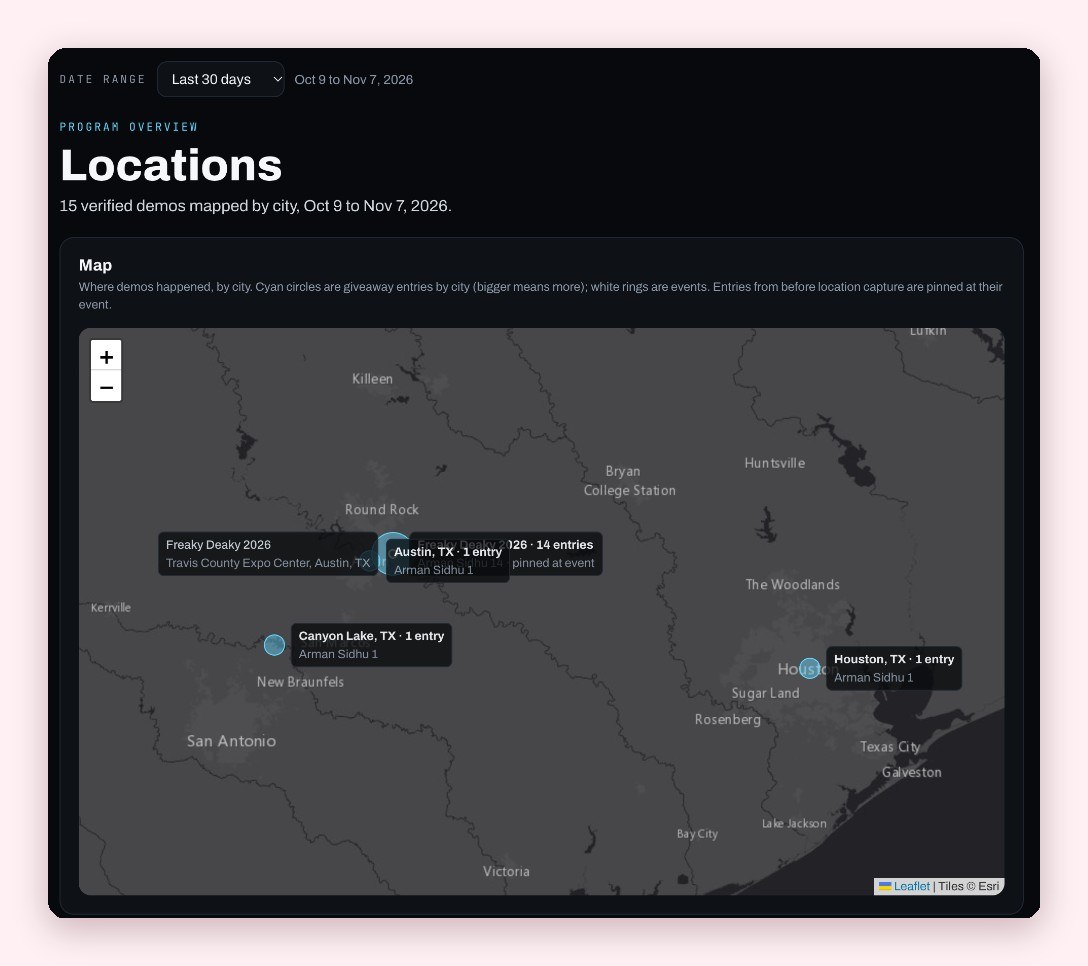
The metric that runs everything: cost per demo, then how many demos turn into a purchase within 30 days, direct and retargeted. If that number works, you turn the budget up.
The part software can't do
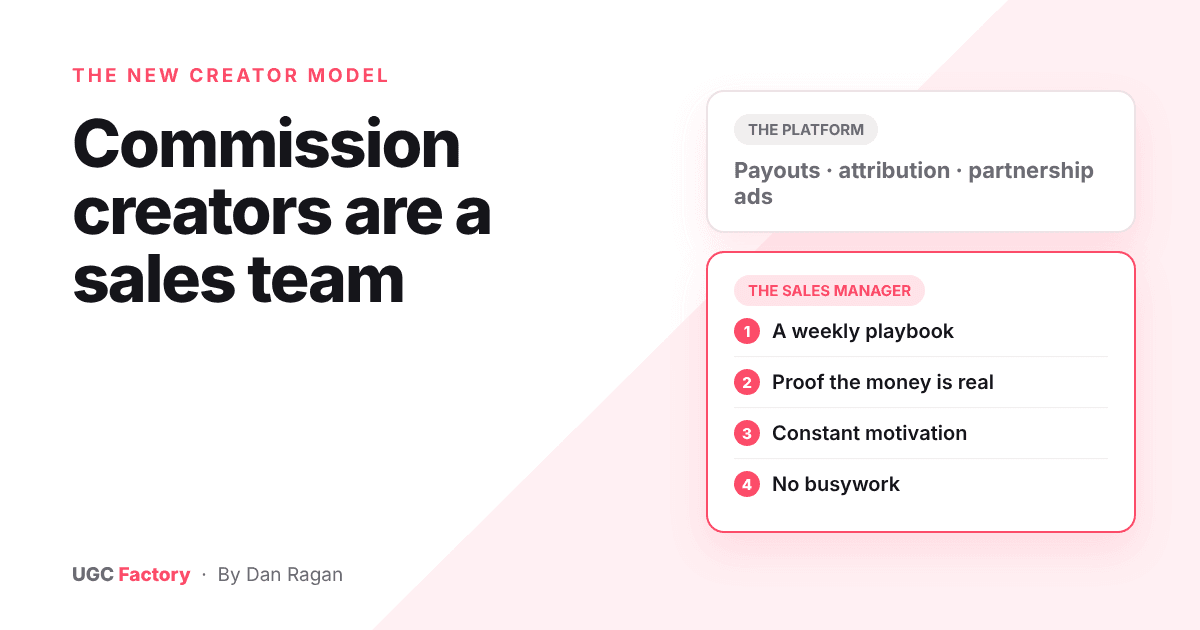
I like Trybe. I set up our own program on it. But a platform gives you a sales force, and someone still has to be the sales manager. Commission creators need a playbook, proof that someone like them is getting paid, and someone pushing them every week. Trybe knows this, which is why its app has a whole tab of partner agencies.
In person, that management is the whole game. Bounties tell ambassadors where to go. The leaderboard shows who's winning. It's closer to a sales floor than a marketplace.
What's next
Our first 100 BASSCRAFT™ units land in December, and every one goes to creators and ambassadors, not customers. I'm posting one video a day until we hit 5,000 presales, and the Tribe is a big part of that story.
Then we're running the same playbook for other brands under a new name, POV Factory. It fits products people react to within ten seconds of trying them, sold to people who gather in predictable places: car audio at car meets, drinks at tailgates, supplements on the golf course.
Trybe put creators on commission. I'm putting them on the street.
If you run a brand people need to feel, taste or try, I want to talk.
Dan Ragan is the founder of UGC Factory and POV Factory, co-founder of BASSCRAFT™, and owner of Soundhouse ATX in Austin.
FAQ
What does taking Trybe IRL mean?
Using Trybe's commission model, creators paid on the sales they drive, for in-person demos instead of uploaded videos. Ambassadors run short product demos where buyers gather, film them on glasses, and earn per demo plus a share of the sales they start.
How much do ambassadors earn?
On the BASSCRAFT™ program, $5 per verified demo plus 15% of every sale they start. Earnings depend on how many demos they run and how many convert.
What products fit an in-person demo program?
Products people react to within about ten seconds of trying them, sold to buyers who gather in predictable places every week.
About Dan Ragan
Dan Ragan has spent his career going where it's hard to scale. He ran live-streaming activations for brands like Bose, Marriott and Warner Bros, then founded UGC Factory, which has made creator ads for about 1,000 DTC brands and now runs on an AI back end with two full-time employees. His newest work takes the creator commission model off the screen: paid ambassadors running in-person demos, filmed on Meta glasses and paid on the sales they start. He's proving it on BASSCRAFT, the haptic bass seat cushion he co-founded, and building it into POV Factory for other brands. He lives in Austin and also owns Soundhouse ATX.