Organic-First Testing: Use Organic as Your Ad Lab
There's too much to test on paid. Run ideas on themed organic accounts first, read the signal, then scale only the winners with ads.
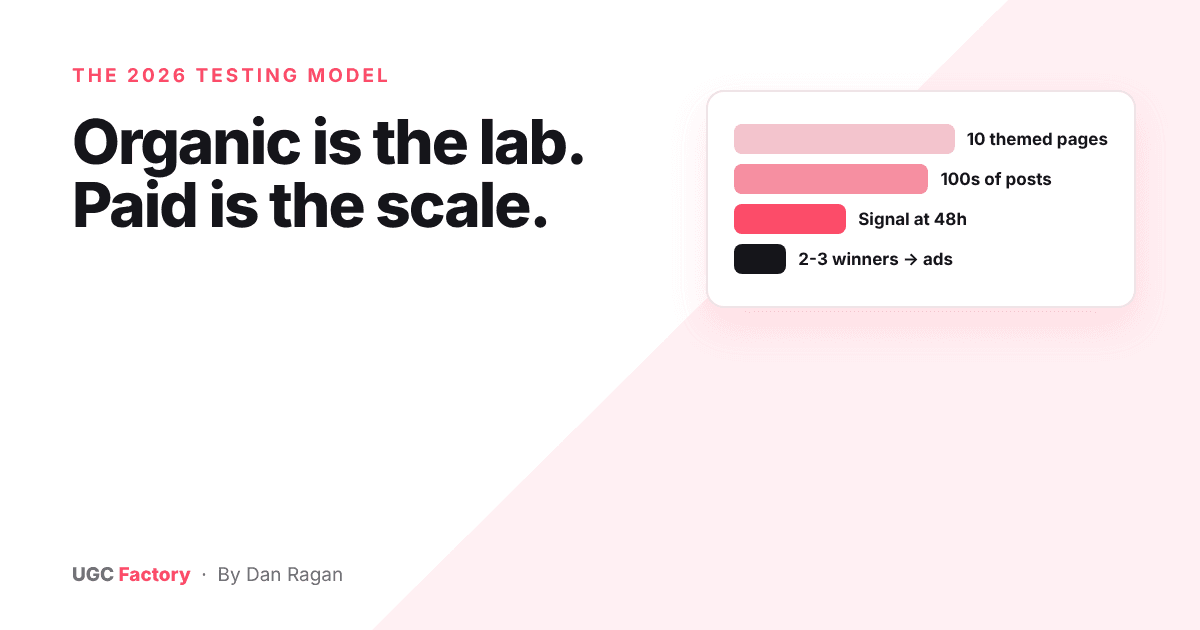
Table of Contents
Next year there will be too much content to test on paid. AI has made production cheap, and paid reach keeps getting pricier: Meta's average price per ad rose 14% year over year in Q3 2026 (Meta's Q3 2026 results). The brands that keep winning will test everything on organic first, then put budget only behind what already has signal. Organic is the lab. Paid is the scale.
The model
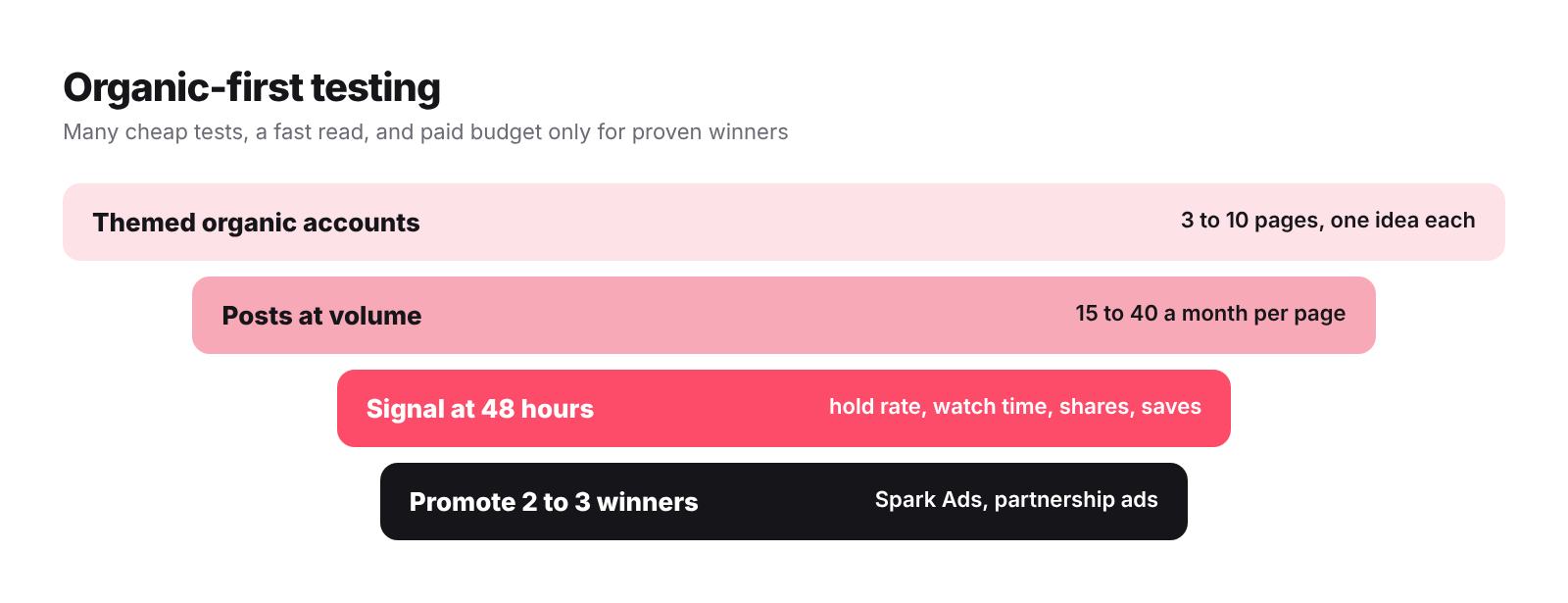
Open themed accounts. Not one brand page. Several pages, each built around one idea. For a haptic car-seat cushion that could be one page that just rates songs by how they feel at full bass, another for road-trip setups, another for gym-to-car playlists.
Post at volume. One framework, repeated with new hooks and creators. On Instagram, trial reels let a brand test a reel with non-followers first.
Read the signal fast. Watch time, shares, saves and comments in the first 48 hours. Views alone mislead.
Promote the winners. Run proven posts as Spark Ads on TikTok or partnership ads on Meta, and cut variations of the hook.
Feed it back. What won tells creators what to make next. The loop should run weekly, not quarterly.
Why it works
Free signal. The algorithm tells you what people want to watch before you pay for a single impression.
Less wasted spend. Ad budget goes behind content that already holds attention.
Volume compounds. Breakouts are rare. One vendor's analysis of canvas accounts found about 1.2% of posts cross 10,000 views and the top 1% drive roughly 88% of views (ReelPilot). You need many shots. See the power law of content volume.
Bloom calls it a lightweight ad
Bloom Nutrition's team describes TikTok Shop the same way: "a top of funnel marketing machine" whose real value "is in the volume of video content it produces, the speed of discovery." Bloom sends product to thousands of creators a month and treats each video as "a lightweight ad" (Entrepreneur UK).
Who posts: brand pages, creators or both
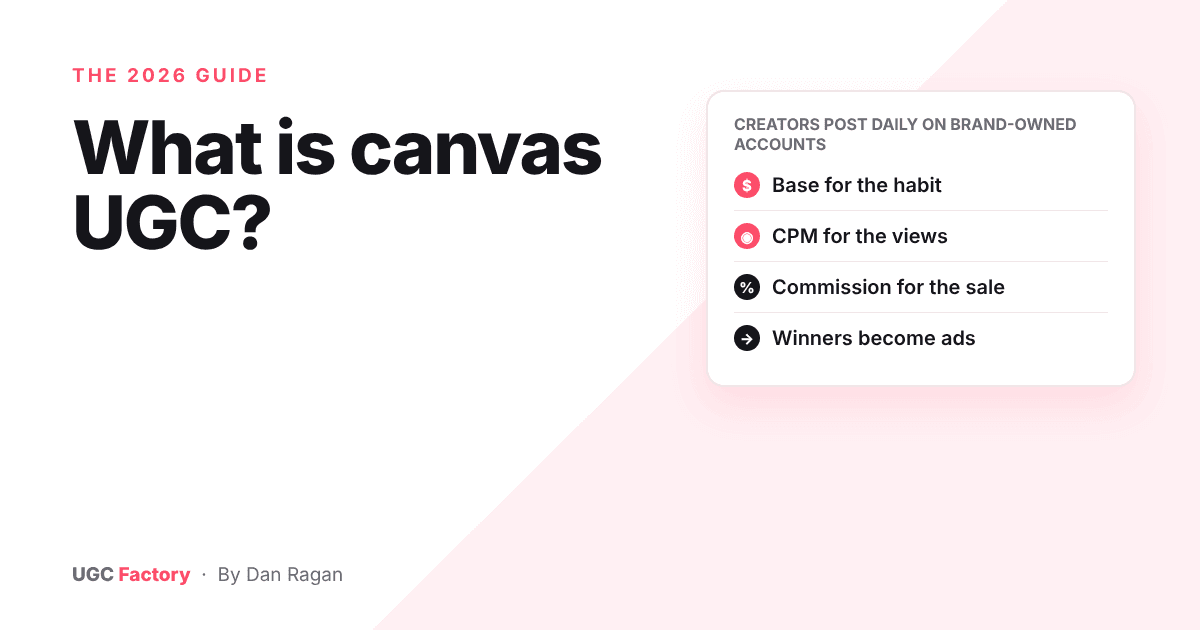
Most programs use brand-owned themed pages run by paid creators, which is canvas UGC. Creators can also test on their own trial reels. Either way, disclose the paid relationship.
What to measure
Hold rate at 3 seconds and average watch time.
Shares and saves per 1,000 views, the clearest intent signals.
Comment themes, which become the next round of hooks.
Paid performance after promotion, to confirm organic signal predicts paid results for your product.
Read next: launching a canvas program in 30 days.
FAQ
What is organic-first testing?
Testing ad ideas as organic posts on themed accounts first, then running only the posts with strong engagement as paid ads.
Do organic winners make good ads?
Often, because the content already holds attention. Confirm with a small paid test before scaling, since buying intent varies by product.
How many organic accounts should a brand run?
Enough to test several distinct ideas at once. Many programs run three to ten themed pages, each focused on one concept.
About Dan Ragan
Dan Ragan has spent his career going where it's hard to scale. He ran live-streaming activations for brands like Bose, Marriott and Warner Bros, then founded UGC Factory, which has made creator ads for about 1,000 DTC brands and now runs on an AI back end with two full-time employees. His newest work takes the creator commission model off the screen: paid ambassadors running in-person demos, filmed on Meta glasses and paid on the sales they start. He's proving it on BASSCRAFT, the haptic bass seat cushion he co-founded, and building it into POV Factory for other brands. He lives in Austin and also owns Soundhouse ATX.